Although the Earth’s population continues to grow exponentially, our traditional freshwater supply is limited. This increases the need for alternative water supply projects, which are often more expensive and therefore less feasible for smaller, under-resourced communities. In order to achieve the level of funding necessary to execute large-scale water projects, such communities are beginning to form water cooperatives.
What is a Water Cooperative?
A water cooperative is a combination of existing utilities or municipalities that come together to create regional approaches to water and wastewater projects. This provides the opportunity to look at the water supply beyond individual community borders as a regional resource. In addition, by working together and combining resources, communities enjoy economy-of-scale benefits. Cooperatives can garner significantly more grants than when communities seek funding individually because they serve larger populations, meaning any state funding received provides a public benefit to a greater number of citizens. Smaller communities can then undertake key projects to improve sustainability and increase access to clean water, fulfilling a vital need for their communities.
What Do Water Cooperatives Look Like in Practice?
The Waccasassa Water and Wastewater Cooperative (W3C) in North-Central Florida is an example of a water cooperative, and our team has been involved since the grassroots level. In 2022, we completed a feasibility study for the Suwanee River Water Management District (WMD) to determine how to address the region’s wastewater needs. We started to attend community meetings, learning more about the small and often disadvantaged cities that make up the region. Although the communities had different drivers for necessitating improved infrastructure, we discovered that each was experiencing reliability problems with water quality and quantity but didn’t have the funding to address it on their own. To improve freshwater supply, a cooperative approach made sense.
The first step was to help the municipalities understand why working together was important. Our team provided technical expertise, educating community stakeholders on the benefits of cooperatives through monthly board meetings. Next, we facilitated conversations amongst participants to determine how infrastructure and utilities would be managed once the cooperative was formed. There are two possible approaches to the management of cooperatives: each city maintains its own utilities, or everyone relinquishes control to the regional cooperative. W3C uses the wholesale approach, and each utility retains ownership of their systems while still benefiting from the cooperative’s regional wastewater treatment projects.
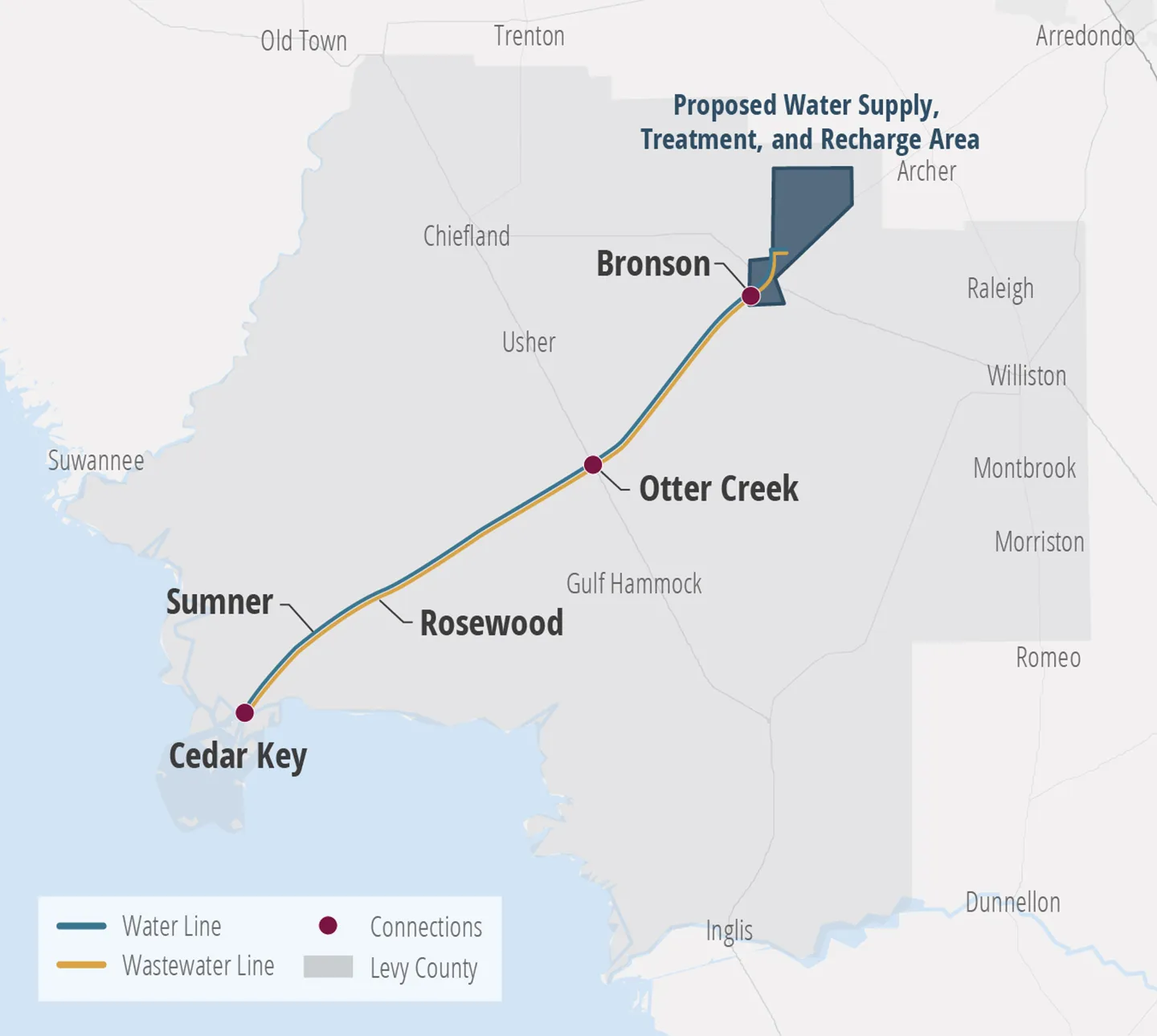 This map shows the areas involved in W3C and proposed facilities plans.
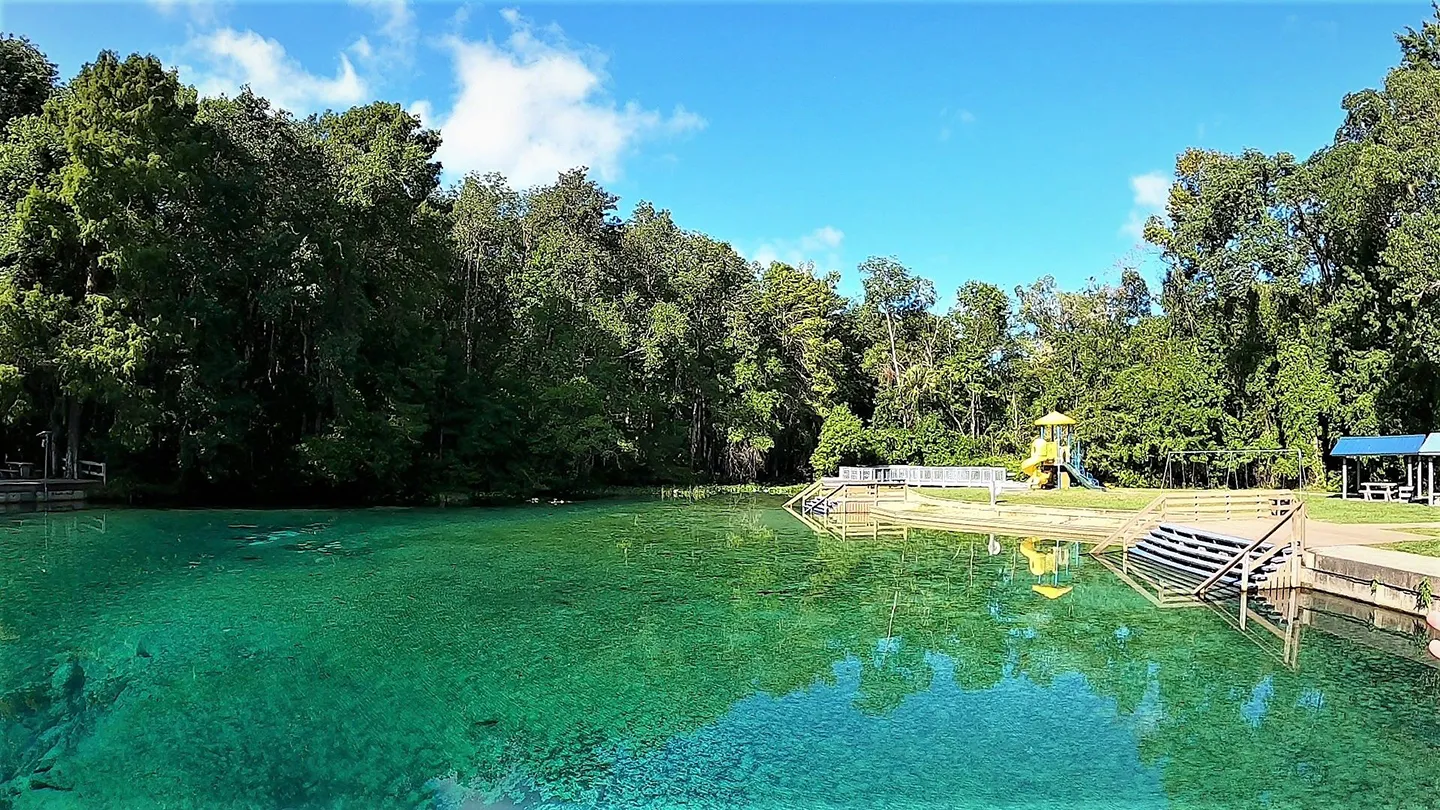 Blue Springs Park in Bronson, Florida, is one of the areas covered in our facilities plan for W3C.
Once W3C was established, we began identifying potential funding sources. When first getting off the ground, cooperatives have little to no operating budget, meaning communities must piece together individual funding sources as if creating a patchwork. In conjunction with the Suwanee River WMD, we helped them apply for numerous funding mechanisms. Examples include WMD grants, Department of Economic Opportunity grants, Department of Environmental Protection grants and loan forgiveness programs, and disaster funding in the wake of Hurricanes Milton and Helene. To date, we have helped source over $40 million in funding for W3C, which covers approximately 29% of our goal, and we continue to diligently work towards achieving 100% funding.
What is the Future of Water Cooperatives?
While water cooperatives are already present in Florida, they are now starting to form throughout the U.S. As the mid-Atlantic region experiences limitations on its aquifer systems, we predict an increase in integrated water cooperative approaches to address challenges in that area.
Our firm is supporting the forecasting of water needs for 16 communities through the Polk Regional Water Cooperative (PRWC), and our funding assistance helped secure over $807 million to offset project costs.
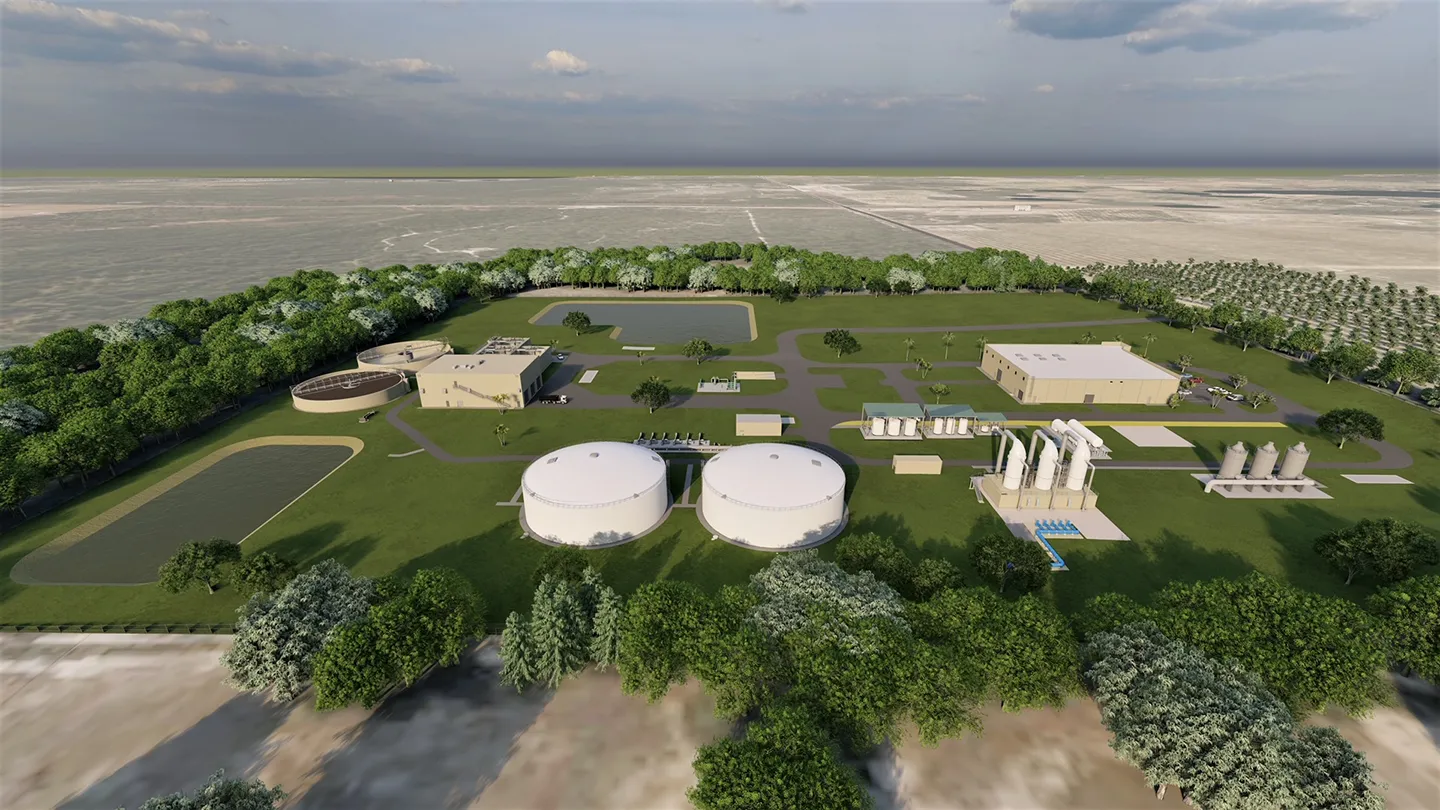 A rendering of our facilities plan for PRWC in Polk County, Florida.
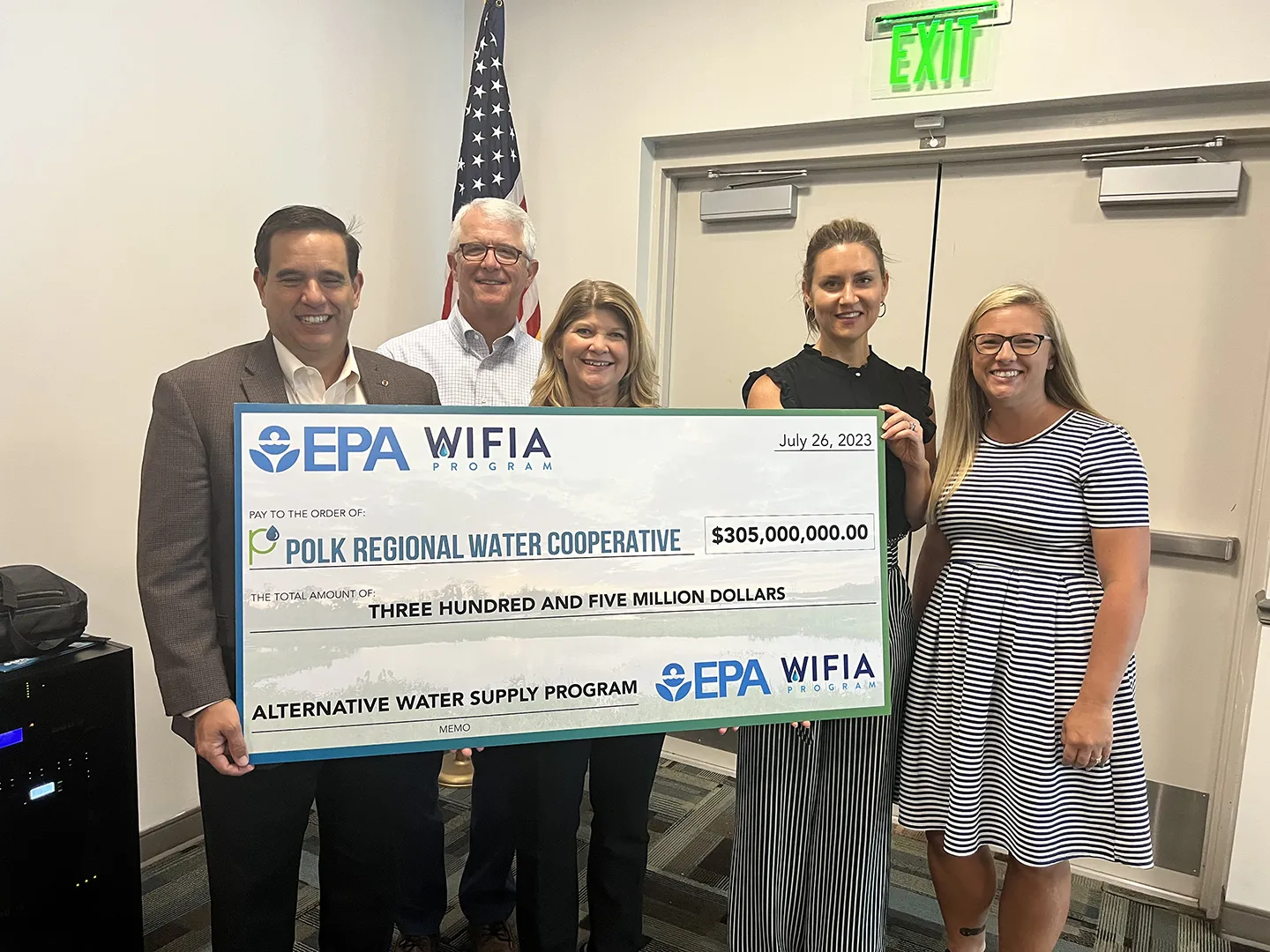 Our team was proud to assist PRWC leadership with finding funding for key water projects.
In addition, our ongoing work with W3C includes the additional acquisition of funds, completing a facilities plan, evaluating sites for new wastewater treatment facilities, and other environmental services. We will continue to help clients look at water holistically, evolving our approach as we address water supplies on a larger scale. We are committed to helping small towns achieve their sustainability and resilience goals in a cost-effective manner.