Energy efficiency and decarbonization are two focal points in the mechanical, electrical, and plumbing industry. As engineers, it is our responsibility to propose and design solutions to address these topics in accordance with the project’s goals. However, measuring the success of such designs requires us to go beyond traditional measurement methodology.
To prove the effectiveness of various energy and decarbonization initiatives and to demonstrate compliance with related governance, engineers need a way to numericize various metrics, like energy consumption, energy costs, or carbon emissions. To do so, we use a technique called energy modeling.
What is Energy Modeling, and How is It Done?
With energy modeling software, we can input the building envelope, internal gains, schedules of use, heating, ventilation, and air conditioning (HVAC) systems, and incorporate other key components to create a digital representation of a building. Simulating this model with local weather conditions, we can then determine the site’s energy consumption over time. Essentially, energy modeling translates building designs into tangible data that we can use to identify focal points in reducing energy consumption, carbon emissions, and ultimately, costs for our clients.
When building an energy model, there are many popular software from which to choose. While each has its own unique interface and capabilities, they all must possess a physics-based simulation engine to calculate energy consumption data and have methodologies to represent the building envelope and HVAC systems.
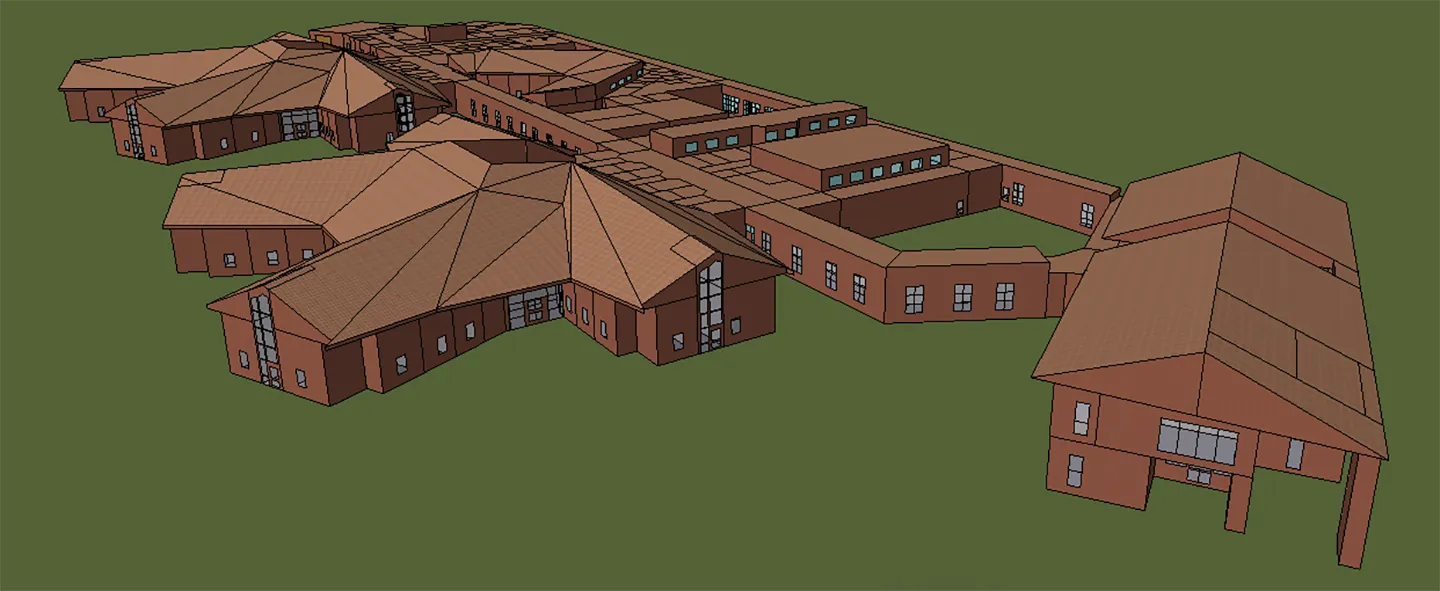 An energy model detailing the 3D visualization of a building design.
How is Energy Modeling Used for Code Compliance?
There are two primary pathways for documenting energy code compliance for building design: prescriptive and performance. With the prescriptive path, every portion of the building that is regulated by energy code must comply. Each individual component must check the box for the building as a whole to be deemed compliant. If a single element does not meet the requirement, the building is non-compliant.
On the contrary, performance modeling allows the flexibility of trade-offs. This method relies directly on energy modeling. We develop a baseline model that represents a standard, code-compliant building, and we compare this model to the energy model of our proposed site. To achieve compliance, the proposed building as a whole needs to be more efficient than the baseline across various metrics, like energy usage, carbon emissions, or energy costs. This allows the design team to compensate for inefficient components with strong, high-performing design solutions elsewhere.
For example, a designer might choose to use higher glazing percentages in a building’s windows. However, this may create an underperforming thermal envelope, resulting in energy loss. To compensate, the engineers can design a highly efficient HVAC system that saves energy using energy modeling to prove that the overall building is more efficient than the baseline building and complies with energy code. As energy codes continue to evolve, they increasingly emphasize performance-based compliance. This shift in outcome-focused design intensifies the role of energy modeling across building design.
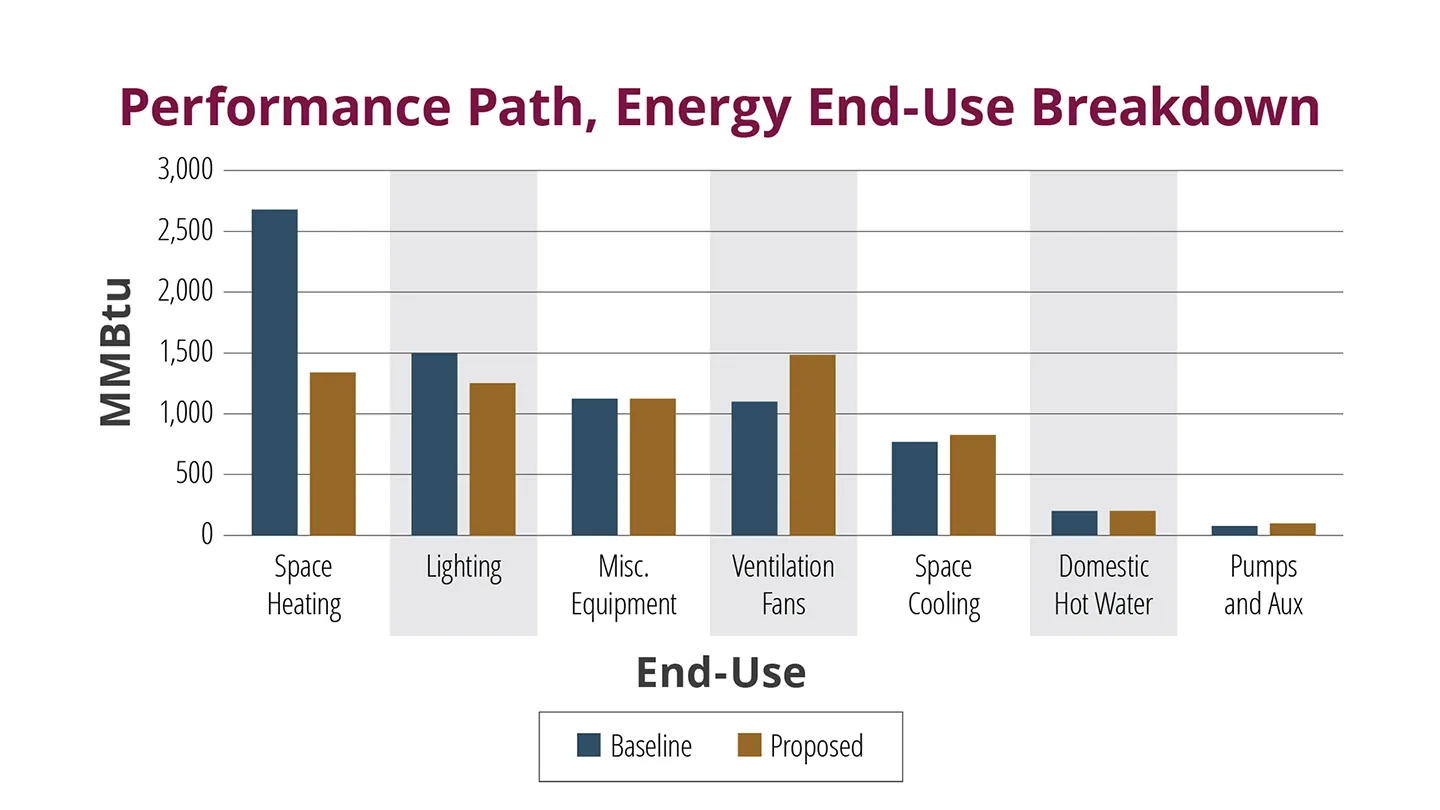 Energy model results compare proposed and baseline building energy usage, making clear the tradeoffs of the proposed building. Above chart shows sample data.
How Else Can We Apply Energy Modeling?
Code compliance is just one aspect of energy modeling. Rather than viewing energy modeling as a means to the end of achieving compliance, think of it as a tool for designing an efficient, sustainable, and resilient building. The greater benefit comes from both consultants and stakeholders alike integrating the model’s findings across design phases to inform the client’s decisions.
For existing buildings, we can calibrate energy models to represent current operations and simulate the effects of possible building renovations. From there, we can use a simple economic analysis to weigh the reduction in annual energy consumption and carbon emissions against the proposed changes’ costs of implementation and operation.
In the decarbonization realm, energy modeling can also be used to navigate challenging building conditions to demonstrate successful carbon reduction initiatives. Using the energy model, we can recommend various load reduction strategies and sequence of operation control changes to increase operational performance of the building before recommending major system or plant decarbonization strategies.
How Can Energy Modeling Serve Our Clients?
Energy modeling has many possible applications as we look to the future. As energy efficiency, energy cost, and decarbonization are prioritized, energy modeling will be a key tool for performing complex analyses that inform client decisions. No matter the application, energy modeling is a great tool in assessing a building’s operational metrics. Using this technique, our team can better assist clients in achieving their sustainability or decarbonization goals.