Almost everyone has childhood memories of visiting their local library— and for good reason. Libraries are special spaces that provide free resources to communities and are one of the few remaining venues with no barriers to entry. Even as media transitions away from traditional print to digital in many places, libraries remain important community buildings that add value.
How is the Library Market Changing?
Like many other markets, the library market is constantly evolving. Previously, libraries were widely known only for their collections of physical books. As we entered the digital age, libraries began to offer other resources, like audiobooks and computers. Modern libraries can also be “libraries of things,” places that house resources of all varieties, like games, sports equipment, and art supplies.
Libraries aren’t exclusively quiet places anymore. Rather, these spaces are built around community engagement, designed to accommodate large groups of people with varying needs in an environment of collaboration and inclusion.
"Whether there’s a group of teenagers looking for a safe space to hang out or someone needing a computer for a job application, the goal is to provide a place that fosters conversations and increases access to necessary resources."
Amanda Voorhees
How Do We Put Our Knowledge into Practice?
One recent example of designing for community needs is our work on the Brown County Public Library in Illinois. In addition to the physical collection of books, the library offers a flexible space, known as a maker space or innovation lab, where members of the community can create items. These areas often include sewing machines, 3D printers, and Cricut® machines that cut vinyl into personalized designs. Locals can also check out a variety of activity-based resources, like pickleball paddles or fishing poles. Other amenities include study rooms, collaboration rooms equipped with digital screens for virtual meetings, a dedicated local history room, and space in the main lobby reserved for local art displays.
Beyond the physical resources, our design for the Brown County Library customizes each section to the needs of its intended audience. In the kids area, our team followed a nature theme, including hanging leaf art from the ceiling to give the illusion of sitting in the trees. We also placed interactive elements on the tables and walls, including educational games to help children practice letters, numbers, and colors. Our young adult section features café tables and lounge seating with access to gaming computers. The adult section houses amenities like a fireplace and puzzle table. To address the various needs of different demographics, adult spaces are set up for casual conversations or comfortable working, while the kid section supports caregivers by offering educational resources and a safe space for play.
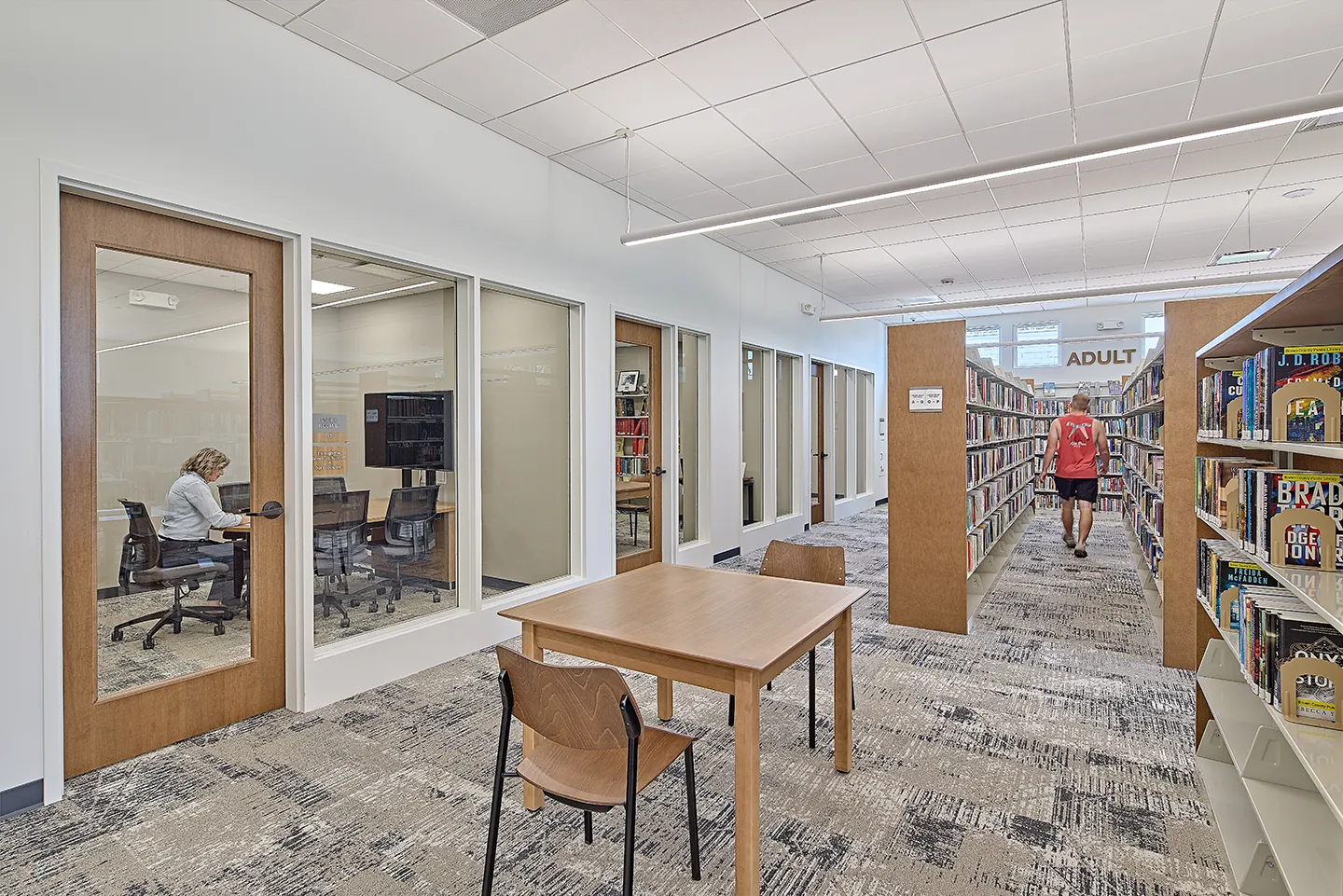 We designed the Brown County Public Library with study rooms, amongst numerous other resources to support the needs of the community.
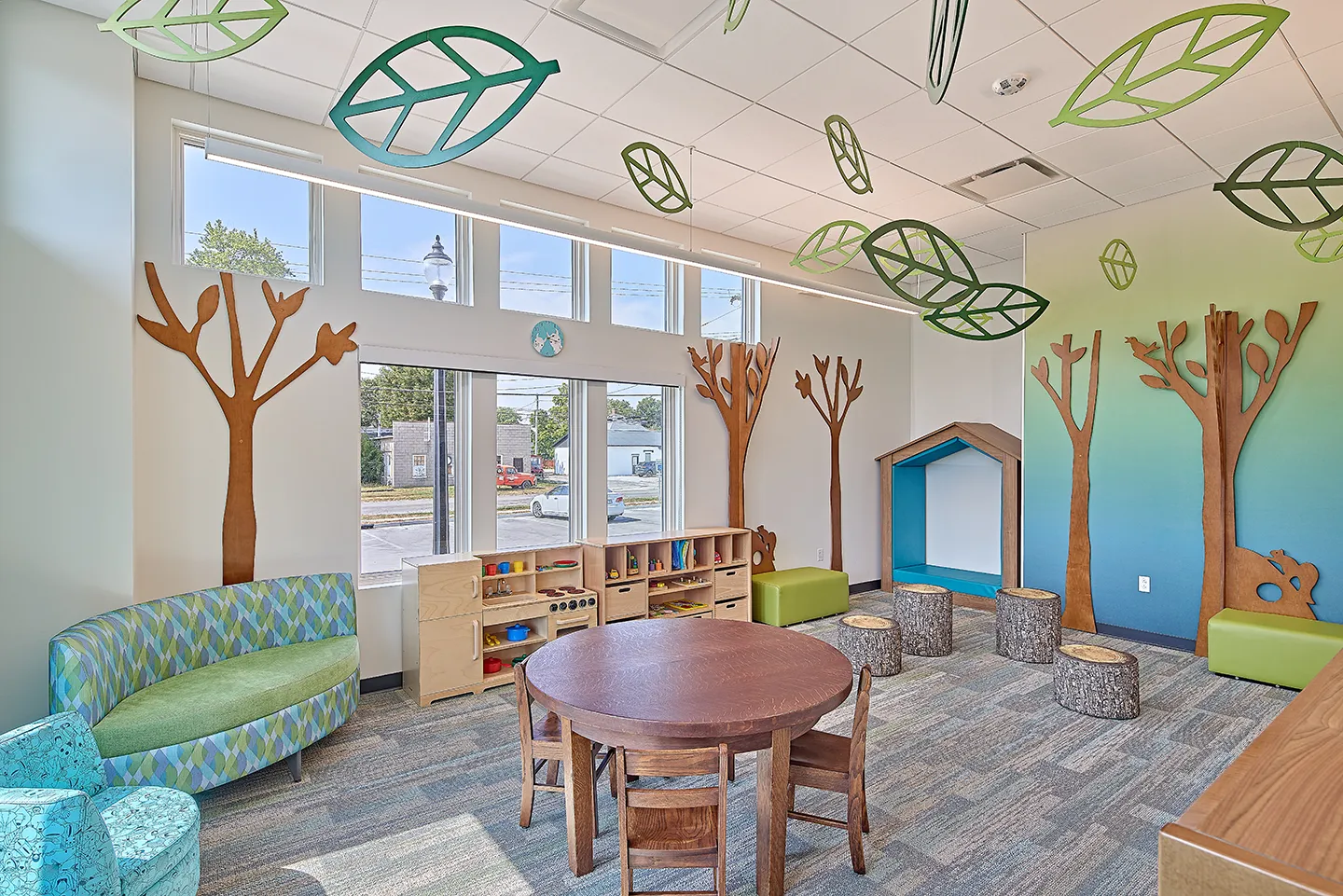 In the kids area, our team chose an immersive nature theme and interactive activities.
How is Community Engagement a Factor?
Our team holds meetings to solicit community input, but our intention is not for these sessions to be mere presentations. Our community meetings include facilitated discussions, opportunities for voting or surveys, and activities to create an interactive space where all feel heard. We compile the feedback, which we then distill down to guiding principles. These values remain at the forefront of every decision throughout the entire design process.
Our approach to the Evans Public Library in Vandalia, Illinois, highlights the importance of such considerations. In many libraries, the space is broken up, and each collection or genre often has its own room. However, in this case, our team determined this community’s stakeholders valued having a cohesive space rather than dividing the library’s sections with physical walls. We decided to implement an open concept design with varying wall and shelving colors to differentiate collections. We also provided full furniture services, selecting pieces that fit the client’s needs while still cohesively integrating into the overall concept.
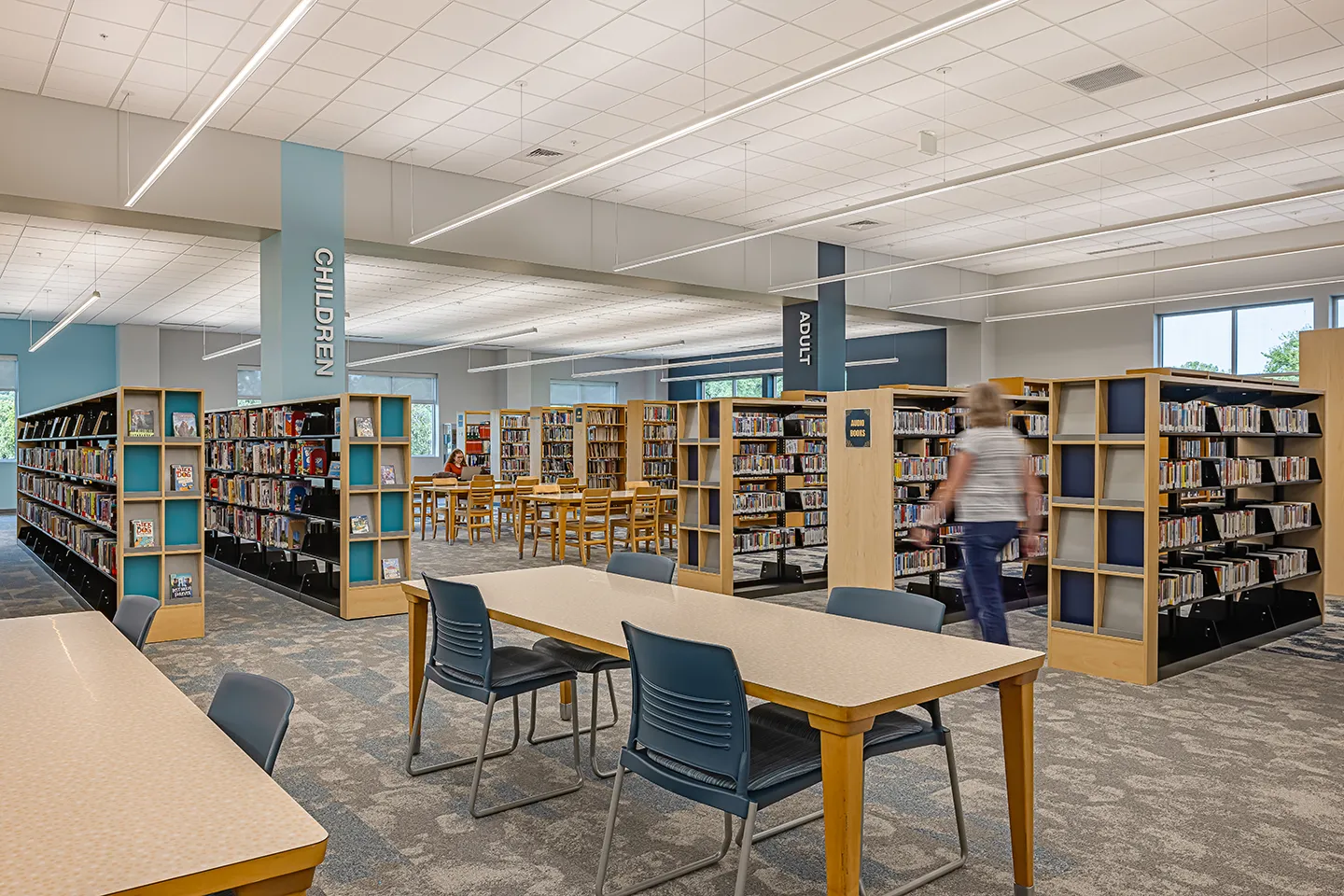 We chose an open-concept design for the Evans Public Library, with sections distinguished by light blue paint in the kids section and dark blue paint in the adult section.
How Will These Efforts Continue in the Future?
As I look to the future, I predict the library market will continue to adapt to ever-changing trends in technology. We anticipate continued growth in online media, where libraries connect patrons to online resources rather than housing items physically. Advancements in artificial intelligence will also shape how patrons access resources. While no one can entirely predict the outcome of these shifts, our team’s community-centered approach leaves space to accommodate for future needs we may not yet know about. Amidst these adaptations, one thing remains true: libraries still have value. Our team is proud to contribute to such projects that build and strengthen communities.