
What does the advancement of technology mean to the architecture, engineering, and consulting industries? Perhaps the possibility of safer environments.
National Safety Month 2014 is coming to a close, and as more safety precautions are put in place and fewer accidents happen, it’s important to remember the history of why our safety devices are so necessary. It’s equally as important to look at safety’s exciting future, where all the innovative technologies designed today can impact the lives of our field workers tomorrow.
How Could Inflatable Helmets and Vests Have a Positive Impact on our Field Workers?
Made popular in Europe by the bicycling and motorcycling communities, where such modes of transportation are more commonplace than in the U.S., inflatable helmets and vests have burst (no pun intended) onto the commuter safety scene. The theory behind the technology mirrors that of a car’s airbag: place a more forgiving barrier between an individual and the point of impact during an accident. In fact, some manufacturers claim their inflatable garments can be up to three times safer than traditional gear.
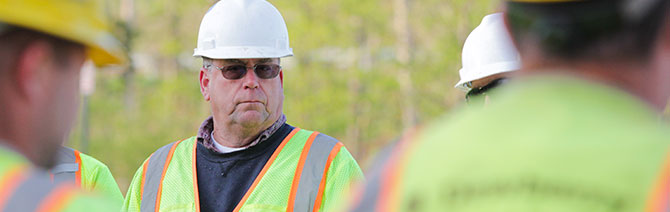
Imagine if our field workers, already equipped with hardhats and reflective vests, had the added protection of an airbag contained within those garments? Placing a more forgiving area around the body’s vital areas, particularly the head (opens in a new tab) and abdomen (opens in a new tab), during a trip, slip, or fall could dramatically reduce the amount of damage inflicted to the brain and internal organs.
How Could Google Glass Help Alert our Workers?
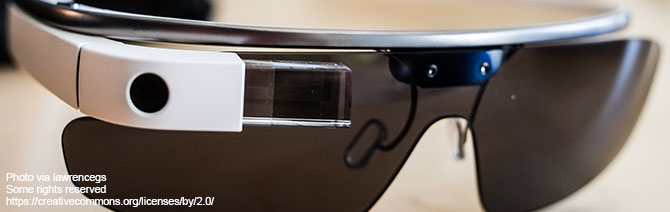
Audi’s research and development teams are already integrating Google Glass with augmented reality programs (opens in a new tab) that help drivers become better caretakers of their cars. Such technology represents a fundamental shift in the process of creating the built world. Paired with augmented reality, it has the potential to create (opens in a new tab)direct lines of communication (opens in a new tab)between what designers envision, and what contractors create.
In terms of safety, Google Glass could act as a warning system for site hazards in the same way some vehicle heads-up displays (HUD) warn drivers of obstacles (opens in a new tab). In fact, there are even similarities between the functions such technology would perform: distance between cars vs. distance between transportation engineers and nearby traffic; identifying objects on the road vs. identifying construction debris; and providing proper directions on the road vs. providing proper directions around an active site during a walk-thru.
A Final Word on the Safety of Today
It’s hard to question the sheer importance of certain lifesaving devices that have remained unchanged through the years. Such technologies invented decades ago, like the safety harness, have remained relevant for a reason: they are effective as the last line of defense against a life-threatening situation. Safety systems like that simply can’t be replaced.
Yet as technology progresses, it’s important to find practical ways of using it to make jobs safer. We must use future technology to mitigate the severity of dangerous situations, or keep them from happening altogether.
About the Author