Route 66 Enhancements and Promotion
Reestablishing a Historic Transportation Icon
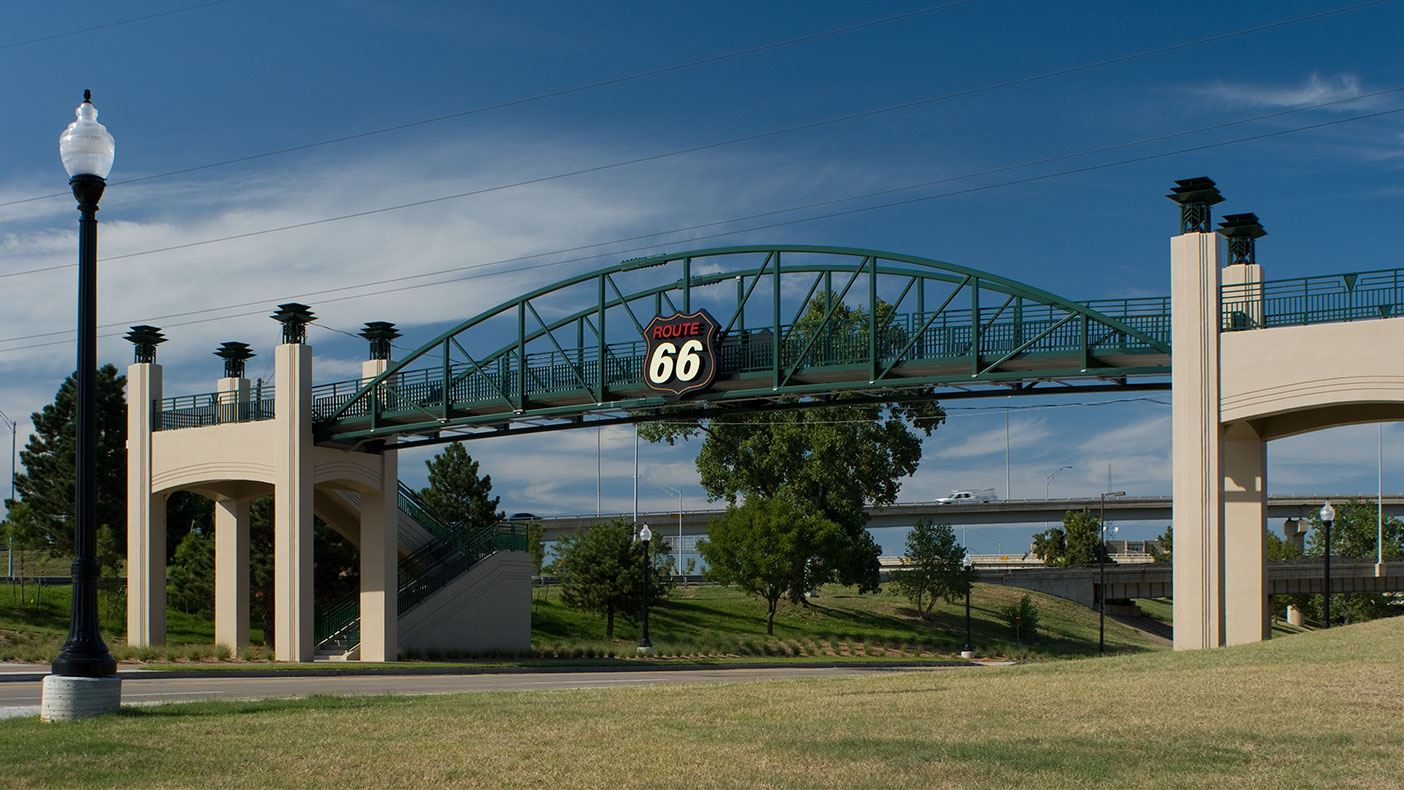
The pedestrian bridge over Southwest Boulevard connects visitor parking to the Cyrus Avery Centennial Plaza and provides an overlook for visitors.
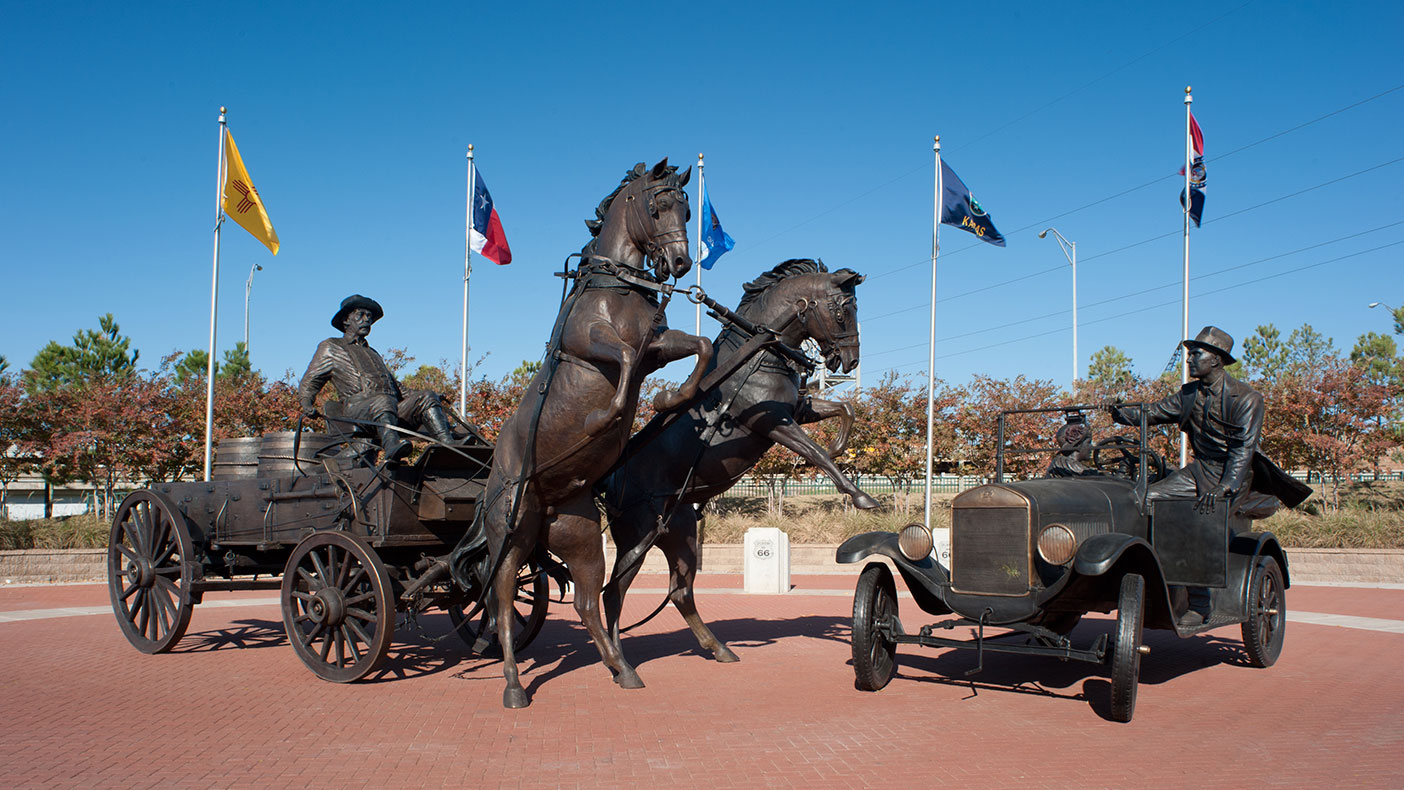
The larger-than-life bronze sculpture is the centerpiece of the Cyrus Avery Centennial Plaza, where kiosks tell the story of Cyrus Avery’s contribution to the road’s development.
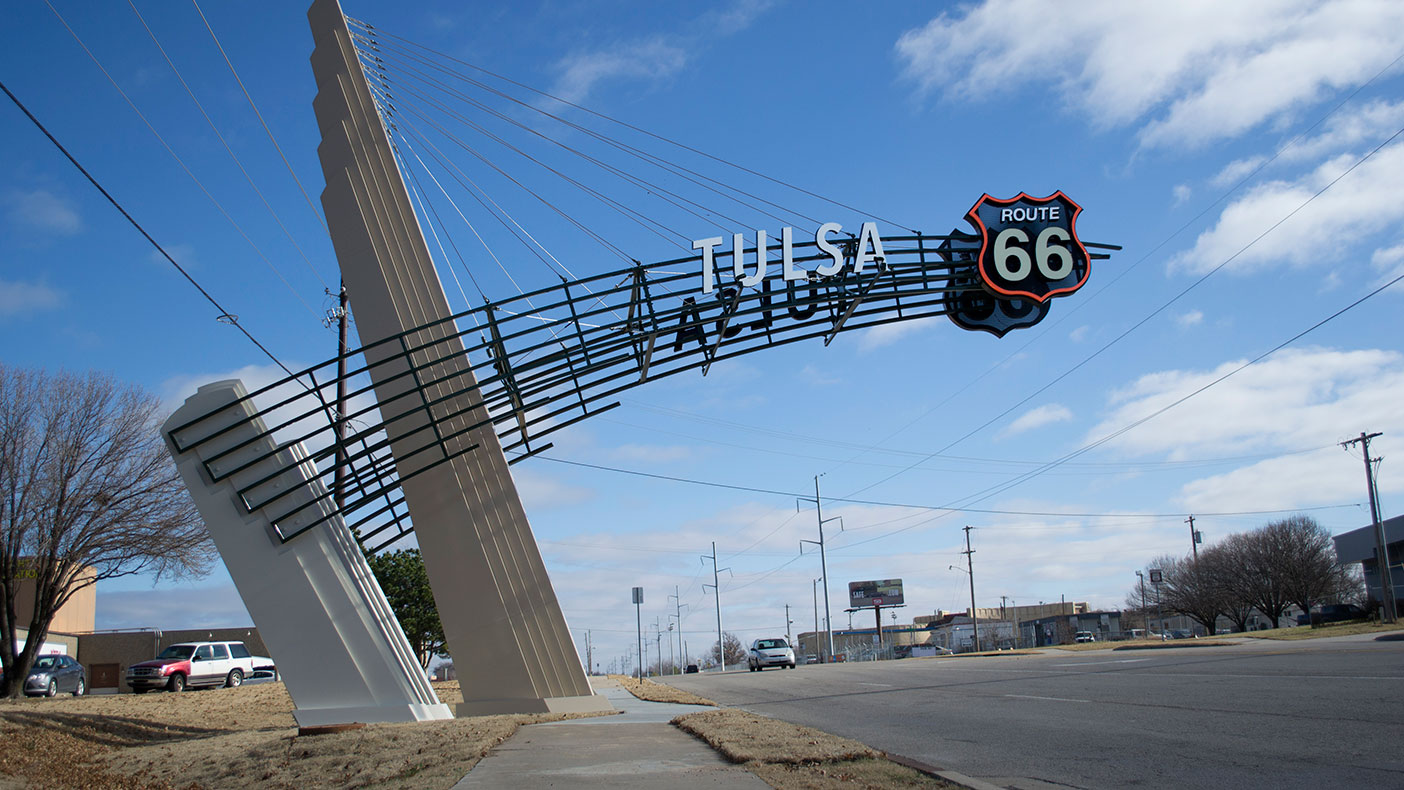
Designed to emulate art deco architecture and reflect the American automobile culture of the 1950s and 1960s, the gateways at both ends of the corridor mark the extents of Route 66 through Tulsa.
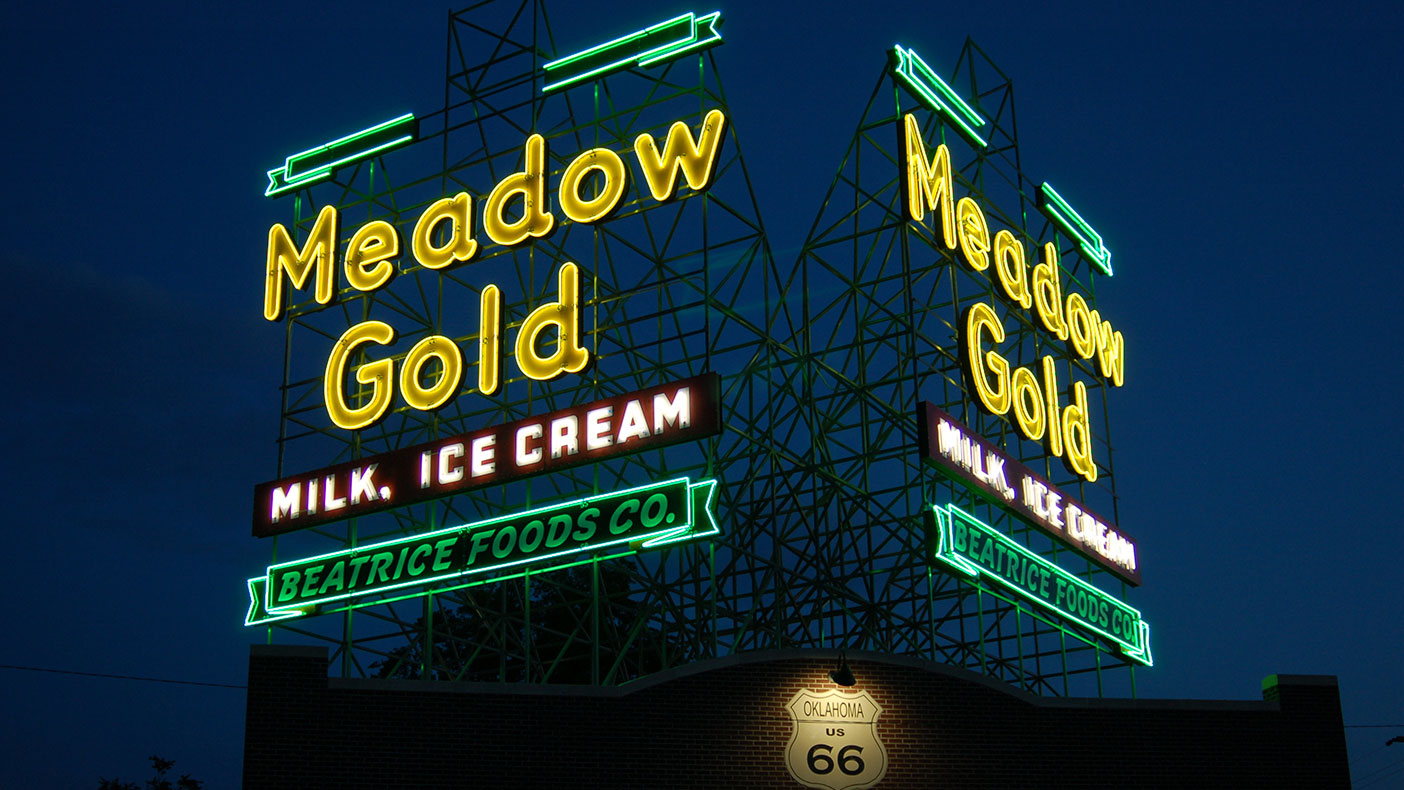
Kiosks inside the Meadow Gold sign plaza contain historical information about the sign, its preservation story, and details the restoration of the largest neon sign on Route 66.
- Owner/Client
- City of Tulsa
- Location
- Tulsa, Oklahoma
- Services
- Architecture
- Markets
- Transportation
- Mileage
- 26 miles
- Cost
- $20 million
- Region
- Southwest
Route 66 helped spawn the American automobile culture of the 1950s and 1960s – a time when untold numbers of “mom and pop” motels, diners, service stations, and tourist attractions sprung up along the route’s 2,500-mile length. Gaining legendary status through song, television, books, and personal experiences, thousands of people now travel the old road each year to appreciate the indelible mark it left on American culture.
Recognizing the economic impact of this transportation icon, the City of Tulsa asked Dewberry to develop a master plan for promoting and enhancing 26 miles of the historic highway. Working closely with Tulsa planners and engineers, we designed gateways that mark each end of the corridor, created the Cyrus Avery Centennial Plaza at the Arkansas River, and helped restore the route’s largest neon sign.
The enhancement of Route 66 has spurred economic development by promoting infill development and repurposing old buildings.
26
miles of historical roadway redevelopment
Awards
-
State Historic Preservation Officer's Citation of Merit (Meadow Gold Sign)
Oklahoma Historical Society
Related Insights
Related Projects
- Location
- Upper Marlboro, MD
- Location
- New York, NY