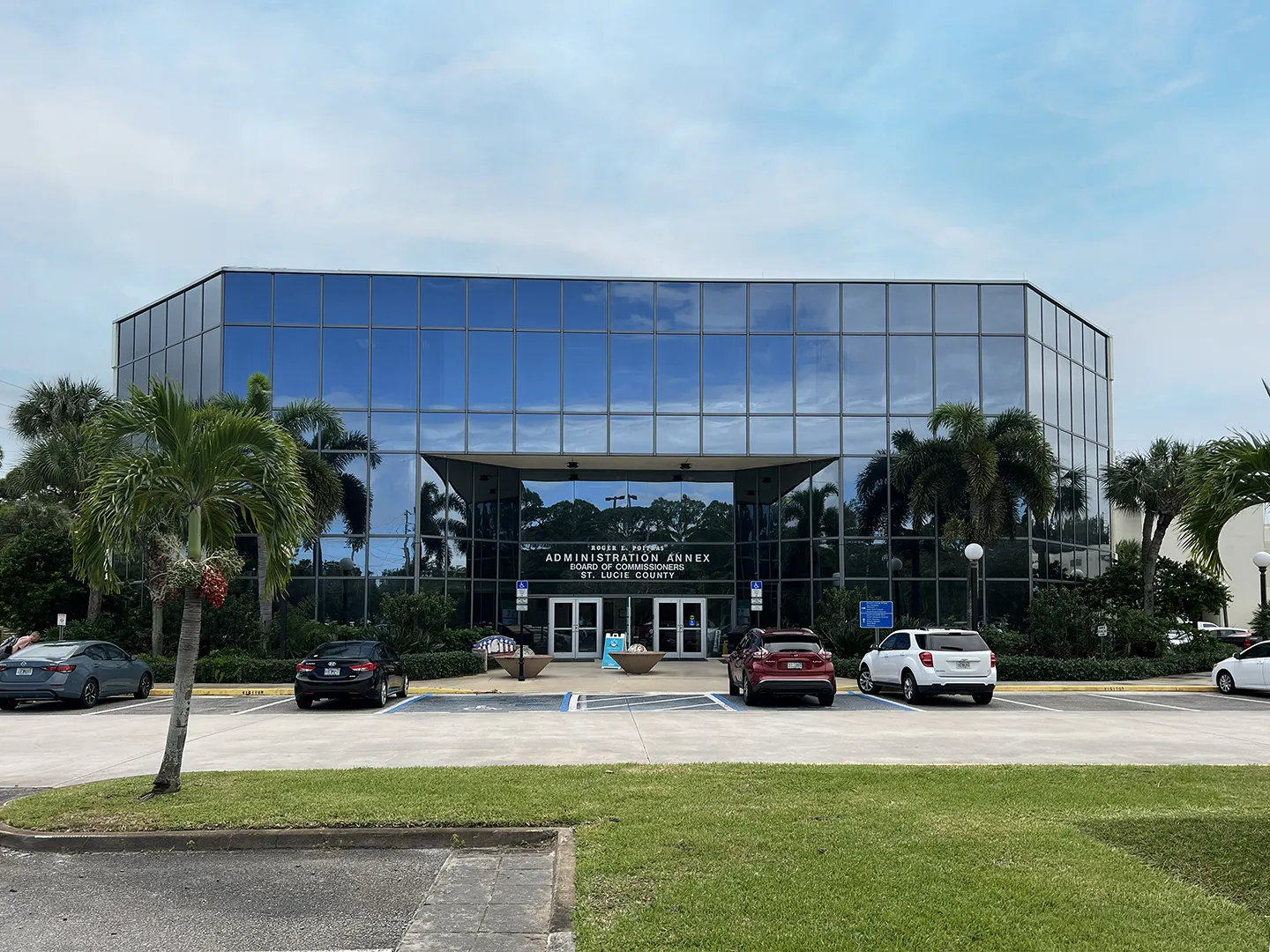
Our firm provided master planning services for St. Lucie County, Florida, in a phased approach to support both immediate needs and future plans.
When our clients come to us with aging facilities, growing user populations, or changing operational needs, they often know they need a solution, but not necessarily what that solution should be. This is where master planning comes in.
At its core, master planning determines a facility’s current and future requirements through needs assessments, asset evaluations, space forecasting, and stakeholder engagement. It is the foundation for the architectural design process, empowering leaders with data on facility conditions, risks, and compliance gaps to make informed decisions.
At our firm, we have over 70 years of experience in supporting our clients as they plan for the future. Through interviews, surveys, facility assessments, and data-driven forecasting, we help communities understand what they will need over the next 20 years. From there, we evaluate options ranging from renovations and expansions to entirely new facilities, bringing together our architecture and engineering groups to deliver a comprehensive solution.
Why are Master Plans for Justice and Community Facilities Different?
Much of my team’s work focuses on justice and community facilities, where master planning is often more complex than in other building types.
Community facilities, such as police stations and public safety buildings, serve diverse user groups, from officers and elected officials to administrative staff. Each group has unique space requirements, operational workflows, and security needs. A successful master plan balances those demands while identifying opportunities to improve efficiency and reduce costs.
Justice facilities add another layer of complexity. Courts, correctional facilities, and secure behavioral health centers must often meet strict operational and spatial requirements, including guidelines from organizations like the American Correctional Association. (opens in a new tab) For example, in correctional settings, planning teams must account for standards governing housing, support spaces, and occupant capacity. Beyond compliance, these facilities must integrate security systems, food and medical services, laundry facilities, visitation areas, and community spaces into a cohesive design.
With so many competing priorities, a thoughtful master plan provides a roadmap that supports both current operations and future growth.
Whether planning a courthouse, a correctional facility, or a community services building, the goal remains the same. We seek to deliver practical solutions that meet today’s needs while creating opportunities for the future.”
Chris Monsma
How Does Data Drive Better Solutions for Our Clients?
As someone with a background in statistics, I value the role data plays in the planning process. Space allocation decisions can be difficult, particularly when multiple departments are competing for limited resources. As a third party in those discussions, we rely on historic data and established space standards to guide decisions, helping clients evaluate needs through an objective lens.
Master planning also creates opportunities for creativity and innovation without the expense of redesigning during construction. Early in the planning process, teams can explore multiple concepts and evaluate alternatives before construction begins. It is significantly more cost-effective to adjust at this stage than once a project is underway.
What Does Master Planning Look Like in Practice?
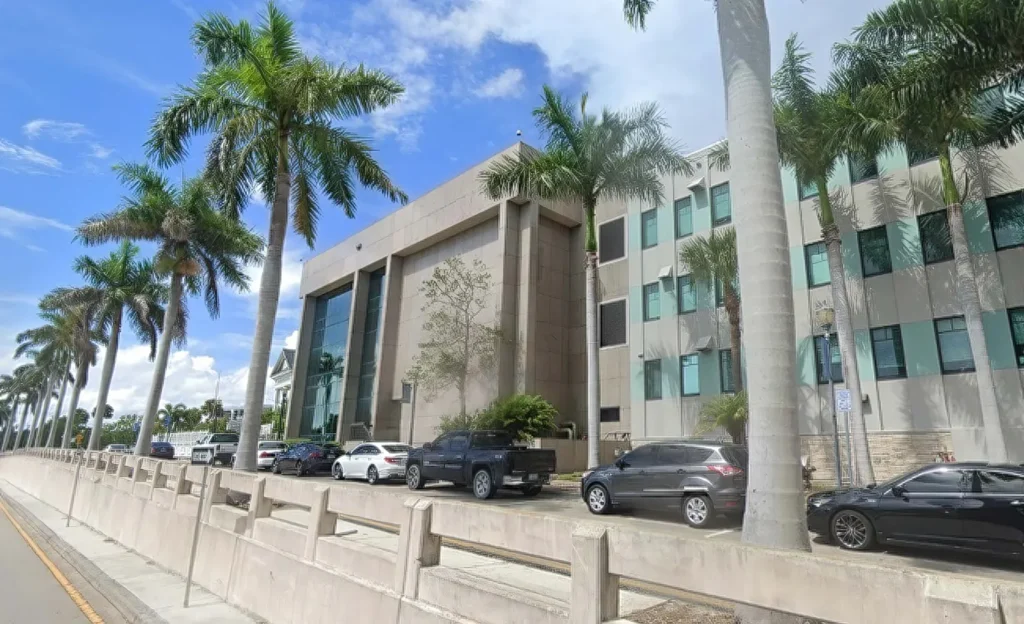
A recent project in St. Lucie County, Florida, demonstrates how we tailor our master planning approach to the client’s needs. The county wanted to consolidate its courts and government functions into a new facility and needed actionable recommendations quickly. Rather than waiting to complete a countywide study, we developed a phased approach that addressed immediate priorities while supporting future planning efforts.
First, we assessed the existing courts and government complex in Fort Pierce. Through surveys, interviews, and data collection on population growth, existing staffing, and workload indicators, we worked with county departments to understand operational needs and future growth projections. In the resulting plan, we recommended a consolidated facility that could accommodate expanded court operations, board functions, administrative offices, information technology (IT) staff, property appraisers, and other key services.
In the second phase, we broadened the study to include an additional 15 government departments that were not relocating to the new complex. By developing space programs for these groups, we provided the county with a comprehensive planning framework it can use for future capital improvements.
How Does Master Planning Prepare Communities for the Future?
Master planning is ultimately about helping clients make informed decisions. By combining data analysis, stakeholder input, and technical expertise, we create flexible roadmaps that help organizations prioritize resources and prepare for future growth.
Whether planning a courthouse, a correctional facility, or a community services building, the goal remains the same. We seek to deliver practical solutions that meet today’s needs while creating opportunities for the future. For this reason, master planning is a valuable tool to the communities we serve.