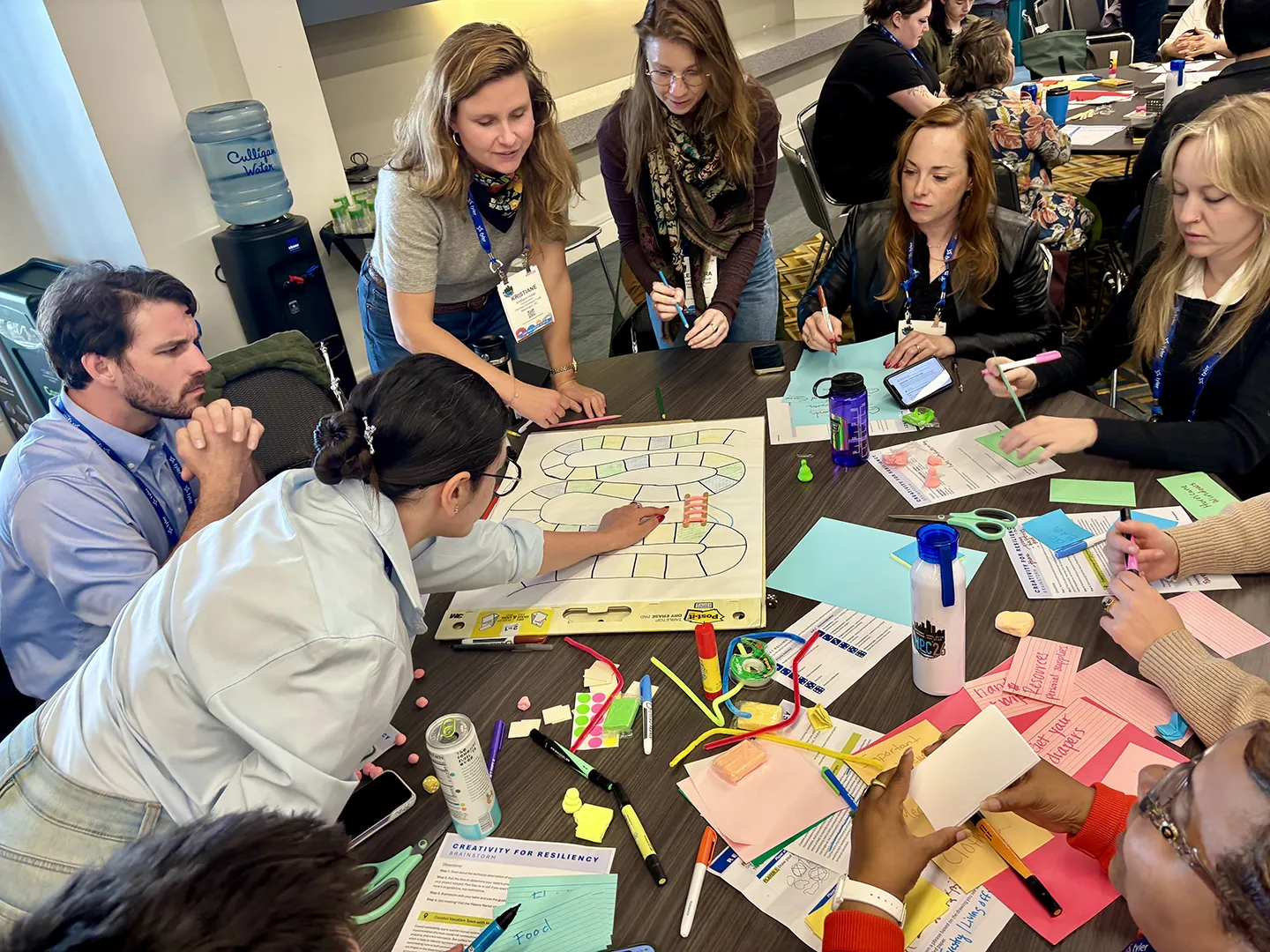
While much of our work centers on helping communities become more resilient, we also focus on our own workplace here at Dewberry. We recognize that organizational strength and adaptability are critical to providing our best service to clients, and regularly challenge ourselves: how can we create a more resilient work environment— one that is increasingly resourceful, collaborative, and supportive? How can we enhance retention, diversity, and professional growth and opportunities for our team members? The answer begins with resilient leadership.
Key Attributes of Resilient Leadership
I’ve held management roles for more than 25 years, both in the military and the private sector. A few key attributes for successful leadership have always been clear to me, including flexibility, humility, and trust. Situational leadership requires that we be flexible, and that we recognize that every person and every situation is different. It’s vital to bring out the best in each employee—to identify their special skills and provide motivation and recognition to draw out those talents.
Humility requires that we understand that, as leaders, our way is not the only way. We can’t stop learning and growing, no matter our leadership stature. We must remain open to new ideas and approaches. Letting go of a long-established practice or procedure can be difficult, but fresh eyes and perspectives can introduce unforeseen benefits, from efficiencies in productivity and cost-savings to breakthrough solutions for clients. Whether a new idea works out or not, we should celebrate rather than inhibit ingenuity and the willingness to speak up.
Turning to Nature for Instruction
I often think of how resilience works in nature. We see plants and animals store up in times of plenty, and disperse in times of scarcity. Trust and respect in leadership work in a similar way. We strive to build trust with our clients and team members, and when confronted with challenges—such as working through a pandemic—we are able to retain their confidence and keep projects running smoothly. Nature also teaches us the importance of diversity, where we see vast ecosystems that are interwoven and dependent upon one another in order to thrive. Similarly, diverse perspectives and life experiences strengthen our teams and our relationships.
Organizational Structure that Supports Flexibility
Strong leadership goes beyond individual style and interaction. We must also think in terms of structure, systems, policies, and training. As one example, for many years Dewberry was organized around “service lines,” which tended to be vertical and somewhat limited. Under the leadership of our executive management, we have transitioned instead to a market-facing, client management focus. This allows us to be more collaborative and proactive, and to think holistically about what each client needs, as well as the market forces affecting their decisions. We are more creative and responsive as a result.
“Nature also teaches us the importance of diversity, where we see vast ecosystems that are interwoven and dependent upon one another in order to thrive. Similarly, diverse perspectives and life experiences strengthen our teams and our relationships.”
Carol Holland
Today, as a nationwide enterprise, we are also more transparent than ever before. Our employees understand our plans, goals, and overall mission, and they are active contributors. Through strong two-way communications, intensive training opportunities, and employee resource groups, our staff members understand the importance of their role and their voice. Above all, resilient leaders value productive teamwork— we know that we can’t do it alone.
About the Author