Observations from the June 26 Making The Grade Symposium at the National Press Club revolving around a six-point plan to solve the failing state of U.S. infrastructure.
In 2013, experts from 45 companies representing the scope of the U.S. infrastructure industry, along with their governmental, financial, and academic counterparts, gathered in New York City for a roundtable discussion on how to fix the infrastructure our grandparents built. As custodians of these decrepit systems, this roundtable represented a nationwide consensus to hand off a more connected, resilient, and sustainable infrastructure to our own grand children.
One year later, those same industry leaders have focused on a six-point plan of action and have gathered again to discuss financing it in an intelligent and realistic way. Being on the floor of the first and second conferences, we overheard firsthand the concerns of those who created the original six-point plan.
Roadway Connections Only Matter When Traffic Crawls
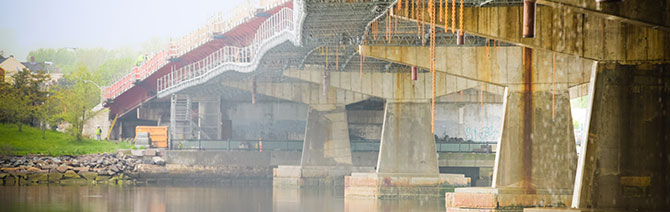
As of now, more than two hundred million trips are taken daily across deficient bridges (opens in a new tab). A majority of our inland waterways haven’t been updated since the 1950s, and our ports are rated as “poor,” which is categorically worse than even “mediocre” in the American Society of Civil Engineers (ASCE) 2013 Report Card for America’s Infrastructure (opens in a new tab). If moving high quantities of massive manufactured products (like cars) from Midwestern cities to ports bordering the Atlantic isn’t easy, businesses will start settling elsewhere.
Grids are Presumed Resilient Until Ancient Substations Short
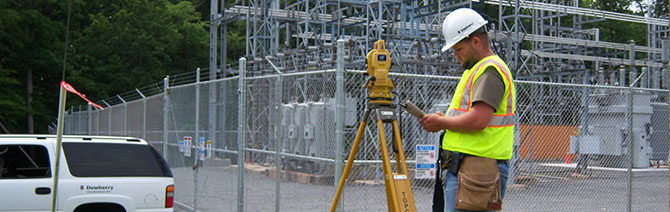
Believe it or not, many businesses rely on rusty electrical grids that originated in the 1800s. While our energy portfolio has diversified greatly since 2005, ongoing permitting issues, increasingly severe weather catastrophes, and limited maintenance have contributed to continued interruptions and even failures (opens in a new tab). Better infrastructure doesn’t just mean new systems, but systems that can handle natural disasters, terrorist attacks (opens in a new tab), and increasing loads without pause.
Stormwater Drains are Invisible Until Storms Turn Driveways into Lagoons
This is where creativity is key. Creative thinkers should not only fix that which is aging, but also find ways of incorporating multiple uses within a single product. We’re big proponents of the National Mall Underground (opens in a new tab) (NMU) project, a microcosm of what needs to be done to infrastructure on a national level. The NMU project fulfills the need to have more connected, resilient, and sustainable infrastructure by providing a garage that doubles as a massive stormwater receptacle.
We’ve Done it Before, We Can Do it Again
The failing state of U.S. infrastructure is a real and present danger, but we Americans are an optimistic people. We built the transcontinental railroad across the plains during the civil war; the Panama Canal after the French failed; the Erie Canal with public/private funds; the Eisenhower Highway System during the Cold War; and we built a veritable fortress of risk reduction around New Orleans in just six years.
The key to fixing this national issue is to create an urgency of now. As it should be, our political leaders are very good at creating urgency, empathy, and innovation during times of great stress. We need to harness that power during more normal times when catastrophic disasters aren’t present. That power can come from the vision provided by Making the Grade.