Five of the top 15 states with the highest economic growth (opens in a new tab) in the U.S. are located in the southeast: Florida (#2), Tennessee (#4), North Carolina (#9), South Carolina (#10), and Georgia (#13). This means there’s an increase in the need for improved and additional infrastructure, including roadways, water/wastewater systems, resilience efforts, and energy sources. Here are infrastructure trends in four southeastern states.
Florida
- Florida continues to focus on treating, reusing, and elongating the life cycle of water. Notable regulations include lead and copper rule revisions (LCRR) and the treatment and regulation of per- and polyfluoroalkyl substances ( PFAS (opens in a new tab)).
- NextEra energy is continuing to work towards its Real Zero program (opens in a new tab), which seeks to eliminate carbon emissions from its operations no later than 2045.
- Florida’s general revenue surplus has allocated $4 billion to support the Moving Florida Forward Infrastructure Initiative (opens in a new tab). This is in addition to the $64 billion budget that the Florida Department of Transportation (FDOT) already has set for the next four years.
Georgia
- The Georgia Department of Transportation (GDOT) continues to improve infrastructure with alternative project delivery methods, including more than 10 major public-private partnership (P3) projects. Some of these projects include National Electric Vehicle Infrastructure (NEVI) deployment, major interchanges and express lanes, and broadband networks.
- The state is pushing for an increase in clean water infrastructure by offering funding opportunities (opens in a new tab) to improve systems, including the Georgia Fund, the Clean Water State Revolving Fund, the Drinking Water State Revolving Fund, and the Georgia Reservoir Fund.
Louisiana
- Louisiana continues to update watershed models, develop master plans, and improve resilience efforts to protect its population.
- In 2023, FEMA announced funding (opens in a new tab) for capitalization grants to help communities reduce vulnerability to natural hazards and disasters. Louisiana’s $6.9-million loan may be used for resilience projects, including flood control improvements, implementing changes in zoning and land-use planning necessary for adaption to the changing climate, and resilient building code adoption enforcement.
North Carolina
- Following a slowdown in spending by the North Carolina Department of Transportation (NCDOT), project activity has picked up over the last year. With a $5 billion budget, projects for all modes of transportation have seen an uptick in activity, including highways, rail, aviation, ferries, public transit, and bicycle and pedestrian.
- Fast population growth (opens in a new tab), specifically in the Raleigh-Durham area, is contributing to a need for improved infrastructure, leading to the development of new schools, healthcare facilities, and commercial and industrial centers.
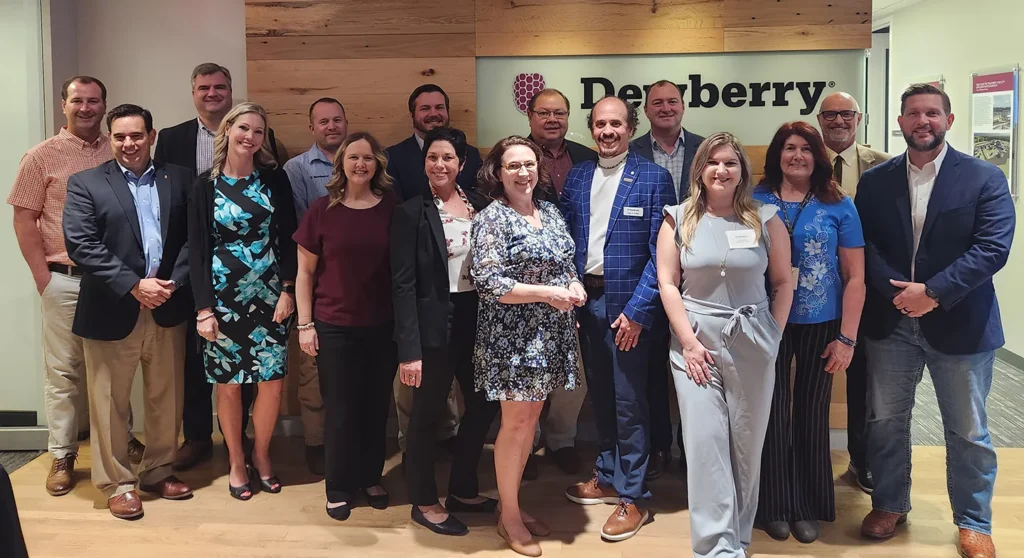
To respond to this growth, Dewberry has added additional staff and technical expertise to our offices across the southeast, and we’re opening new offices and renovating existing ones to accommodate our expanding teams in Orlando, Pensacola, Jacksonville, and Tallahassee, Florida; Atlanta, Georgia; Charlotte and Raleigh, North Carolina; and Danville, Virginia.