Little Muncy Creek Pratt Truss
Maintaining an Historic Structure while Increasing Usability
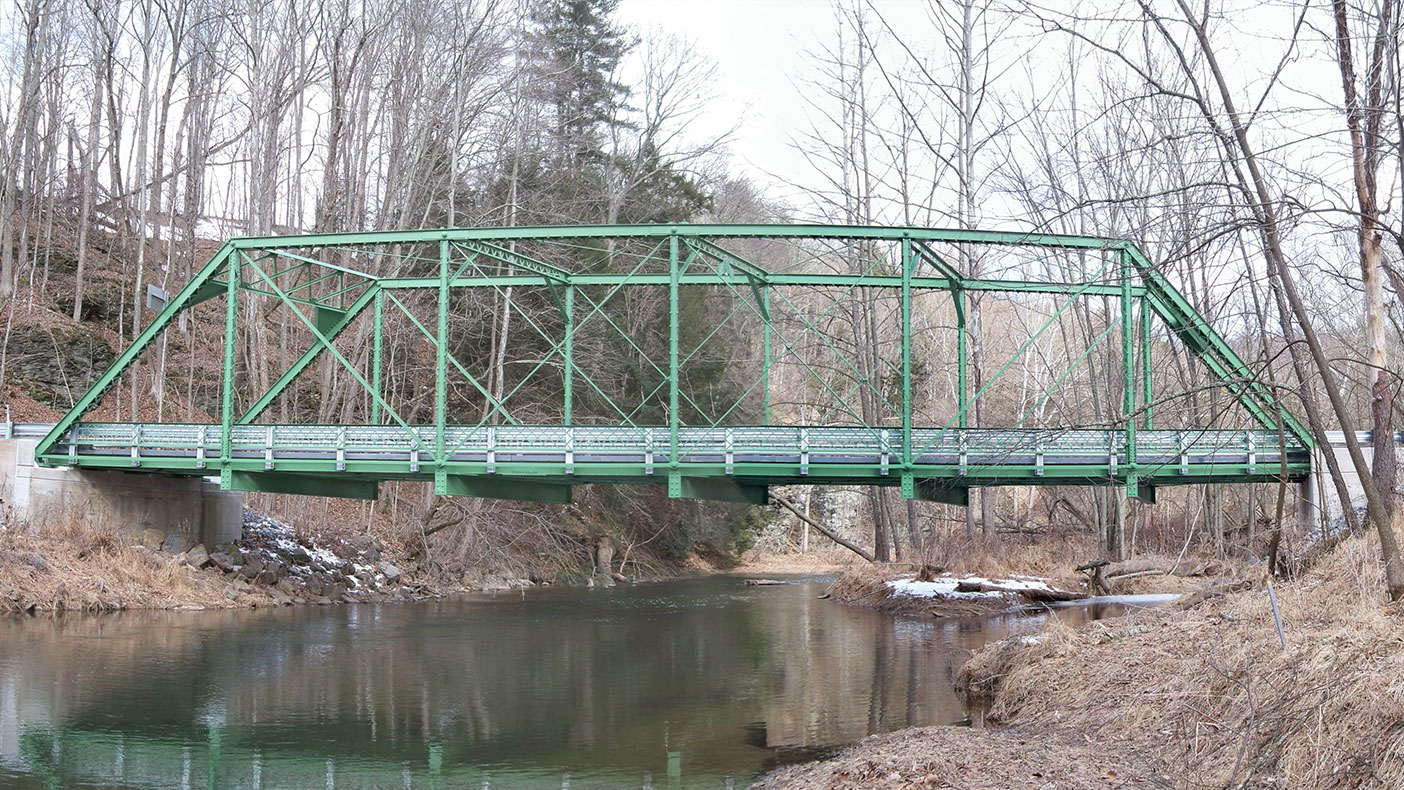
The project consisted of the complete reconstruction of a 1904 Pratt Truss that is considered to be a contributing element to a rural historic district in Lycoming County, Pennsylvania.
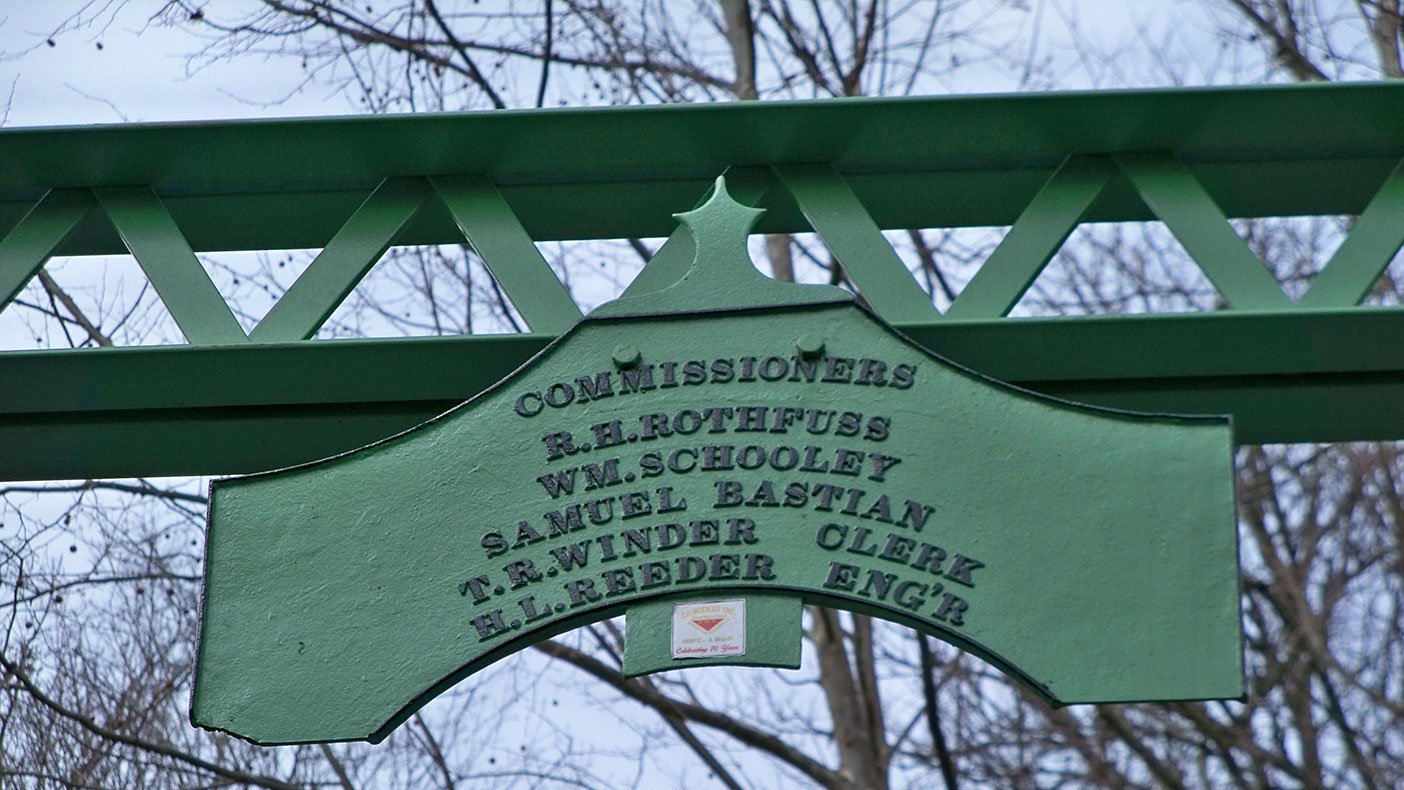
Salvaged by private citizen, the original bridge plate was reinstalled.

The new truss was constructed adjacent to the site and moved into place with a single crane swing which greatly reduced impacts to Little Muncy Creek.
- Owner
- PennDOT District 3-0
- Location
- Moreland Township, Pennyslvania
- Services
- Engineering
- Markets
- Transportation
- Cost
- $1.48 million (construction)
- Completed
- 2016
- Region
- Northeast
For over a century, the 1904 Little Muncy Creek Pratt Truss serviced Moreland Township, a small, rural community of residents and farmers in northeastern Pennsylvania. Originally, the pin-connected truss provided a critical waterway crossing to complete a path for local farmers to deliver fresh produce to town. However, in 2009, the superstructure was given an NBIS rating of 2-“critical condition,” and the crossing was posted for a five-ton weight limit. The required use of a detour by emergency services, school buses, and local deliveries inconvenienced travelers and risked the safety of nearby residents.
The bridge’s aesthetic qualities remain nearly unchanged, because our design retained the original aesthetics while significantly improving the load-capacity of the structure. Details to improve capacity and to provide structural redundancy included increasing the material strength and size of critical members and installation of catch plates, additional counters, and U-bolt hangers at key joint locations. Future maintenance concerns were addressed by galvanizing and painting all members, adding grease fittings to the pin connections, filling the grid deck with concrete over the abutment seats and over the beam flanges, and adding bent curb plates to direct runoff away from the truss bearings. We were responsible for project management, structural engineering, plan preparation, bid documents, specifications, shop drawing review, and construction services.
1904
original construction date
Awards
-
Outstanding Achievement Award
Association for Bridge Construction and Design