Hunter Station Bridge
Replacing an Obsolete Bridge in an Environmentally Sensitive Area
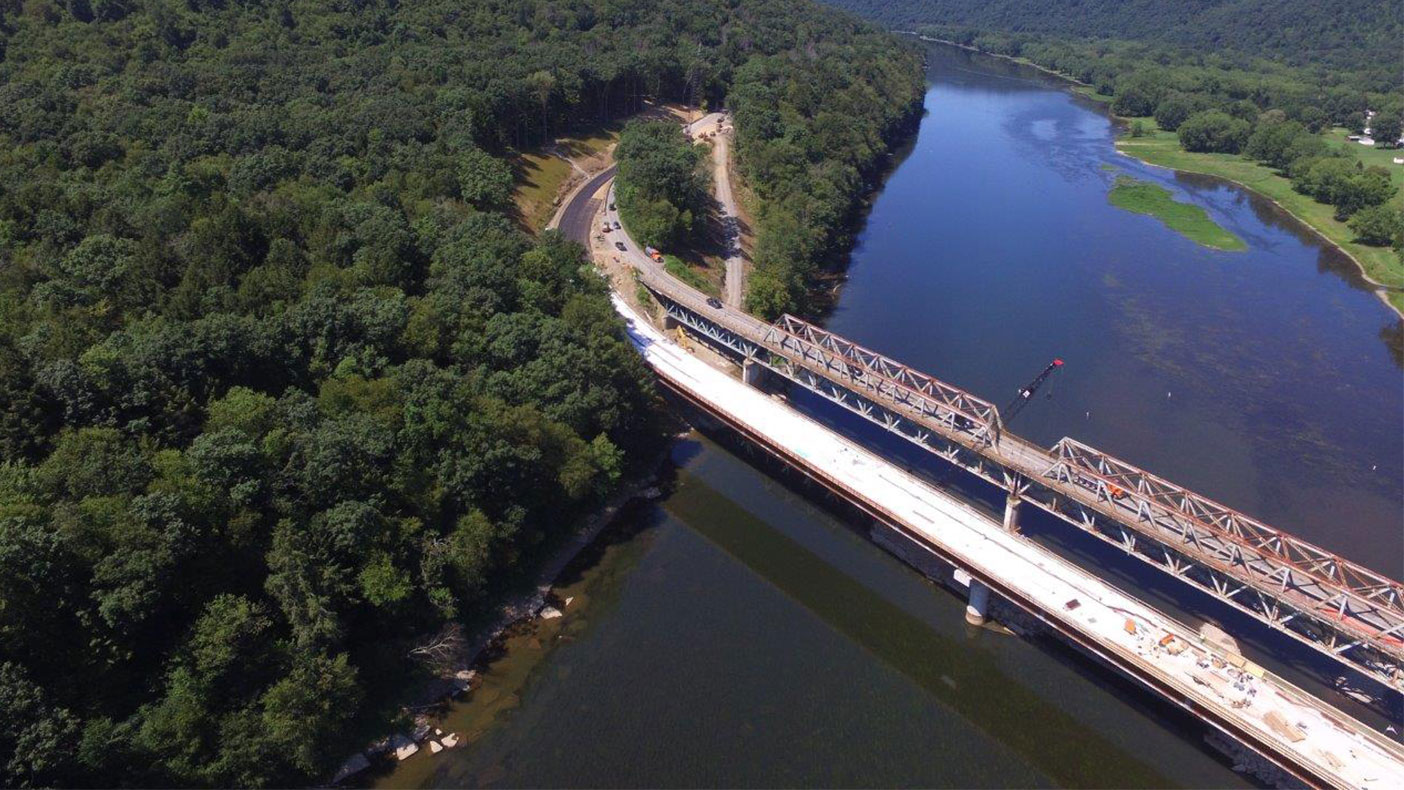
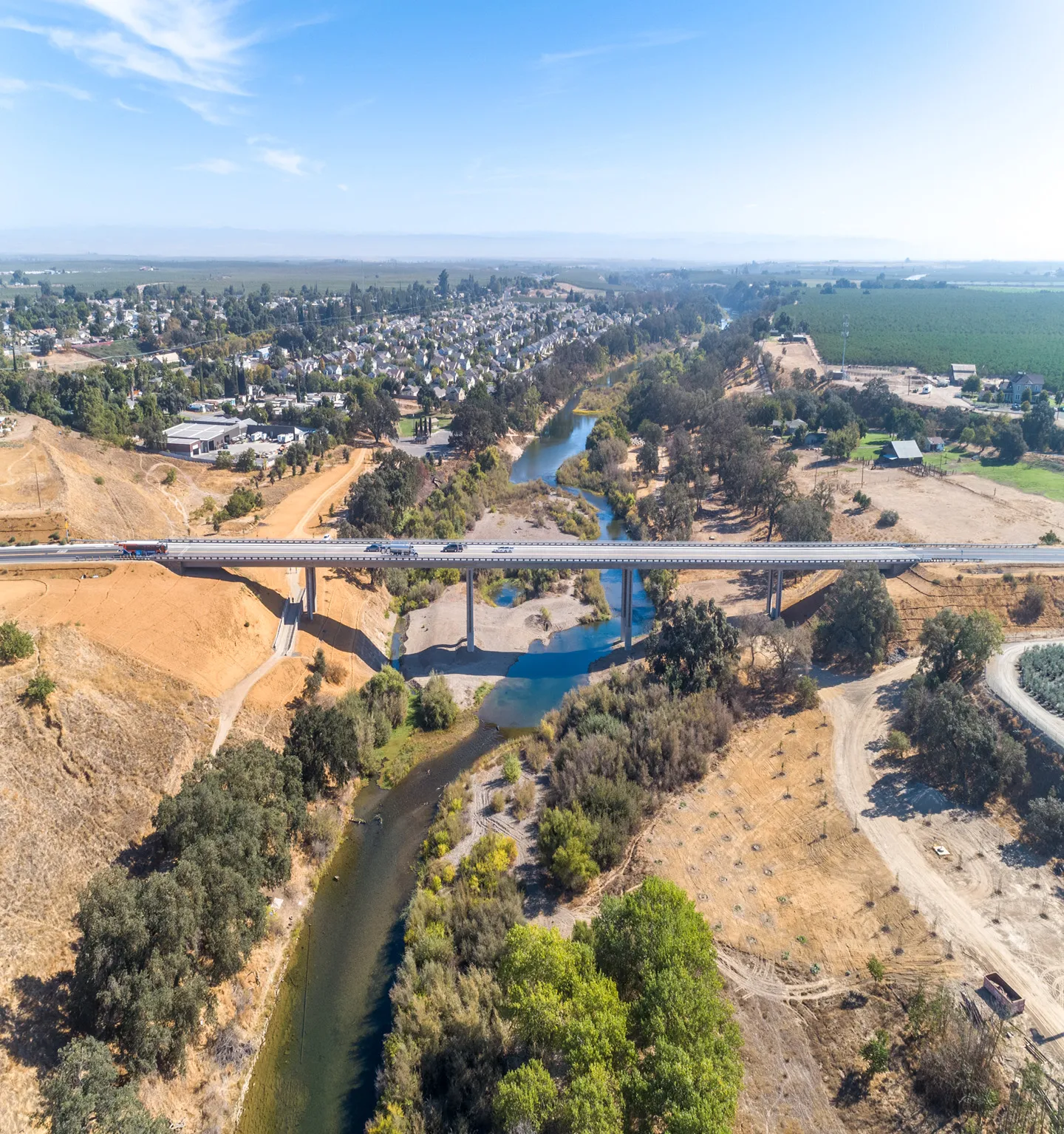
Transporting approximately 1,100 vehicles a day, the Hunter Station Bridge carries U.S. Route 62 over a designated wild and scenic stretch of the Allegheny River.
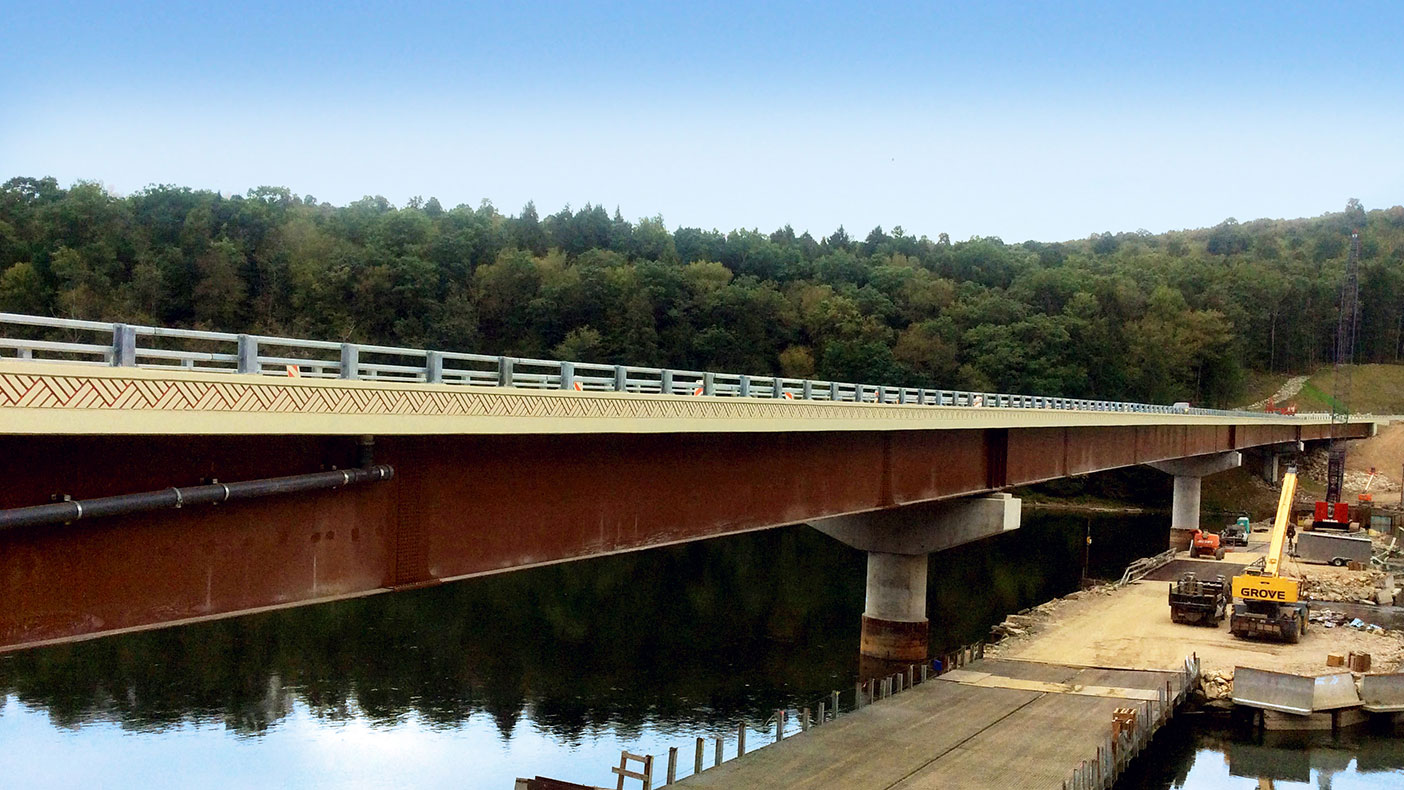
A causeway system between the new and original bridge was utilized for both demolition and construction work.
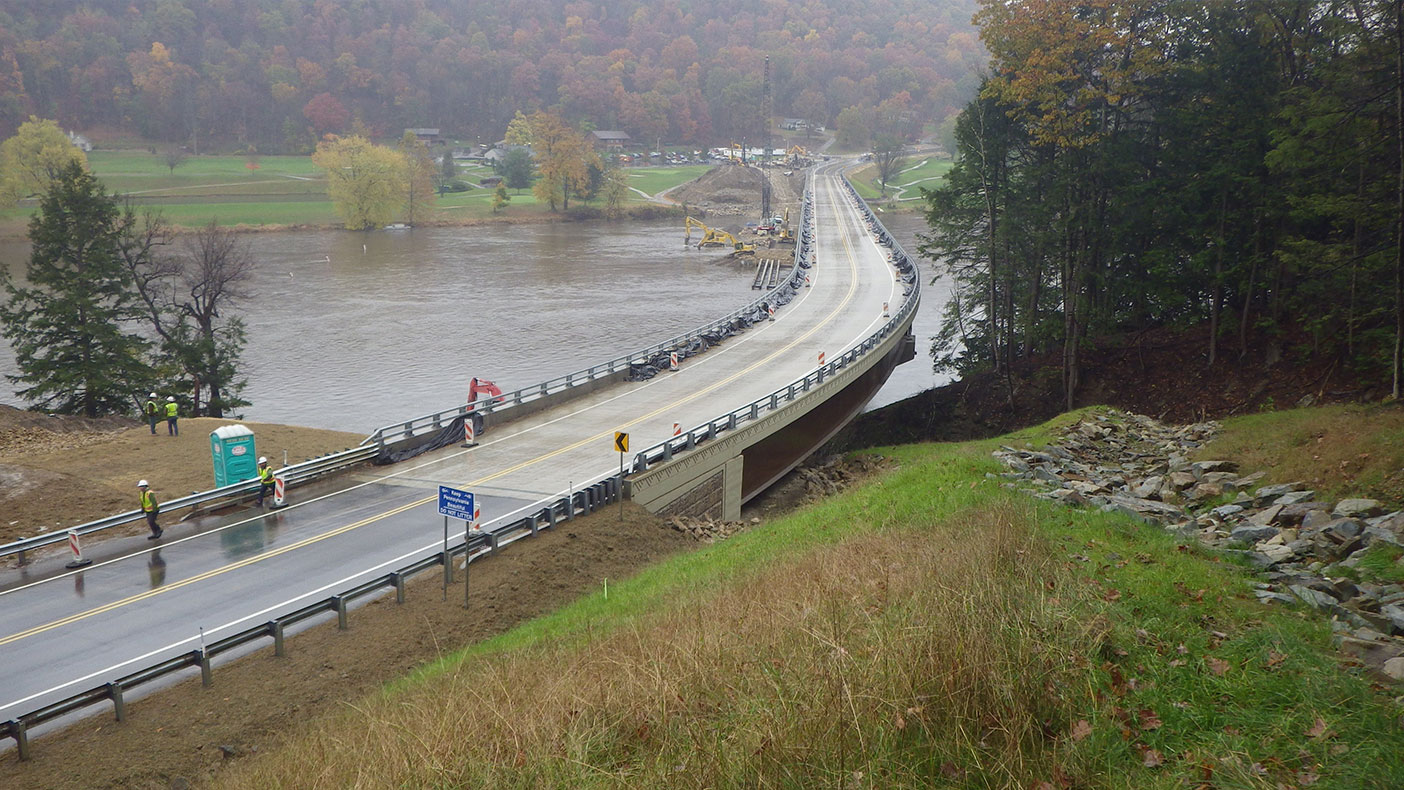
The in-stream work was completed within one construction season. Although a short-duration detour was permitted to allow demolition to begin prior to opening the new bridge to traffic, the team completed the project without implementing the detour.
- Owner
- PennDOT District 1-0
- Location
- Tionesta Township, Pennsylvania
- Services
- EngineeringEnvironmental
- Markets
- Transportation
- Cost
- $24.2 million (construction)
- Completed
- 2018
- Region
- Northeast
The Hunter Station Bridge carries U.S. Route 62 over a designated wild and scenic stretch of the Allegheny River. Our preliminary engineering services included in-depth inspection of the 1050-foot thru-truss bridge to evaluate rehabilitation versus replacement options and direction of the environmental studies necessary to secure NEPA approval. A large population of endangered mussel species identified at the site required extensive coordination with state and federal agencies. Ultimately, the approved solution consisted of full replacement with a new four-span structure utilizing drilled-shaft pier foundations to minimize riverbed disturbance.
Our final design included innovative safety measures such as a high-friction surface treatment-a special asphalt mix that enhances traction-and a beveled pavement “safety edge” making vehicles less susceptible to road-departure crashes. Discussions with the Seneca Nation of Indians identified aesthetic treatments that evoked the region’s Native American heritage and detailed construction sequencing maintained canoe and boat traffic through the project area during bridge erection. Finally, prior to construction, the endangered mussels within the causeway footprint were relocated to other suitable habitats within Pennsylvania and several other states.
1050
foot thru-truss bridge
Awards
-
Outstanding Achievement
Association for Bridge Construction and Design