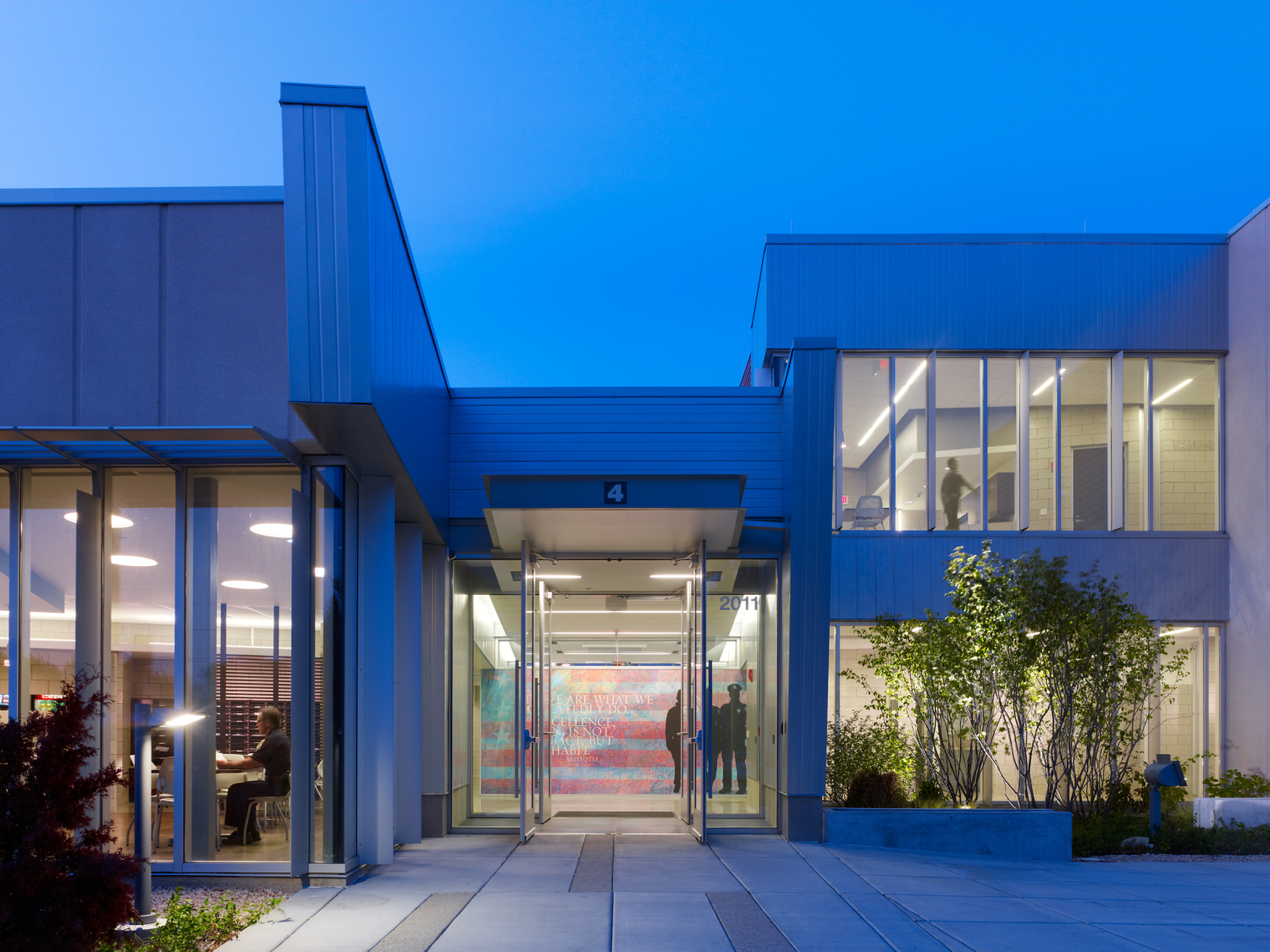
Well-designed correctional facilities support many important missions today. Security, as always, is paramount, but jails and prisons must also meet higher standards for program delivery, addressing education, training, counseling, and preparation for reentry. Another key challenge in the correctional field is to design facilities that are extremely efficient in terms of sustainability and operations.
Seeking the Carbon-Neutral Prototype
Incorporating effective strategies for sustainability has required a comprehensive review and assessment of how many prisons have been designed around the U.S. We recently conducted a wide-ranging analysis for the Federal Bureau of Prisons (FBOP), for example, to explore how the agency’s prototype design might be altered to yield a self-sustaining, carbon-neutral facility prototype for future construction.
Through the years, FBOP has constantly refined its design standards to enhance the operations and energy efficiency of its correctional facilities. Dewberry’s review process included charrettes with FBOP representatives to explore energy issues, sustainable methodologies and technologies, and the Bureau’s preferred operations in a mid-rise federal correctional institution (FCI) at a Midwestern location with ample land.
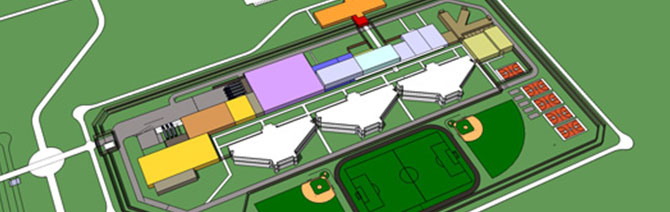
Our team of architects, engineers, and environmental specialists worked in close collaboration with the FBOP to create a process for organizing, reviewing, and selecting sustainable initiatives for implementation. Once the viable initiatives were identified, they developed diagrammatic drawings for a new sustainable prototype with reduced footprint and modified housing unit configuration.
Meeting the 2030 Challenge
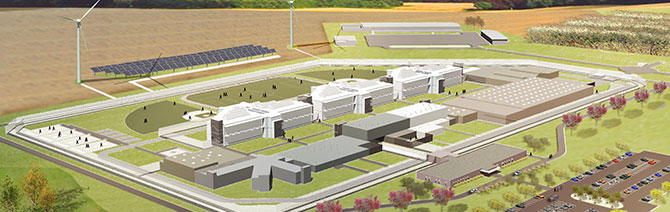
The process reviewed every aspect of sustainable design and construction, from the amount of land used for construction to the installation of renewable energy systems such as solar panels and wind turbines. A key recommendation involved the introduction of a smaller security perimeter, reducing the size of the facility footprint as well as roads and support infrastructure. This transition would be accomplished through the use of four-story facilities with two double-tiers, rather than a double-tier approach (a single story with mezzanine). FBOP had previously implemented the four-story, stacked double-tier concept on tight sites, but use of the concept on all sites will result in a more energy-efficient facility while preserving land that may be used to generate renewable energy.
These concepts will enable the FBOP to meet the federal government’s 2030 net-zero-energy building requirement. As states and municipalities begin to follow FBOP’s progressive example, the correctional industry will clearly be taking significant steps forward in creating sustainable efficiency.
About the Authors
Jim Matarelli